OpenAI launches ChatGPT Go at $8 monthly while confirming ads are coming to free and paid users
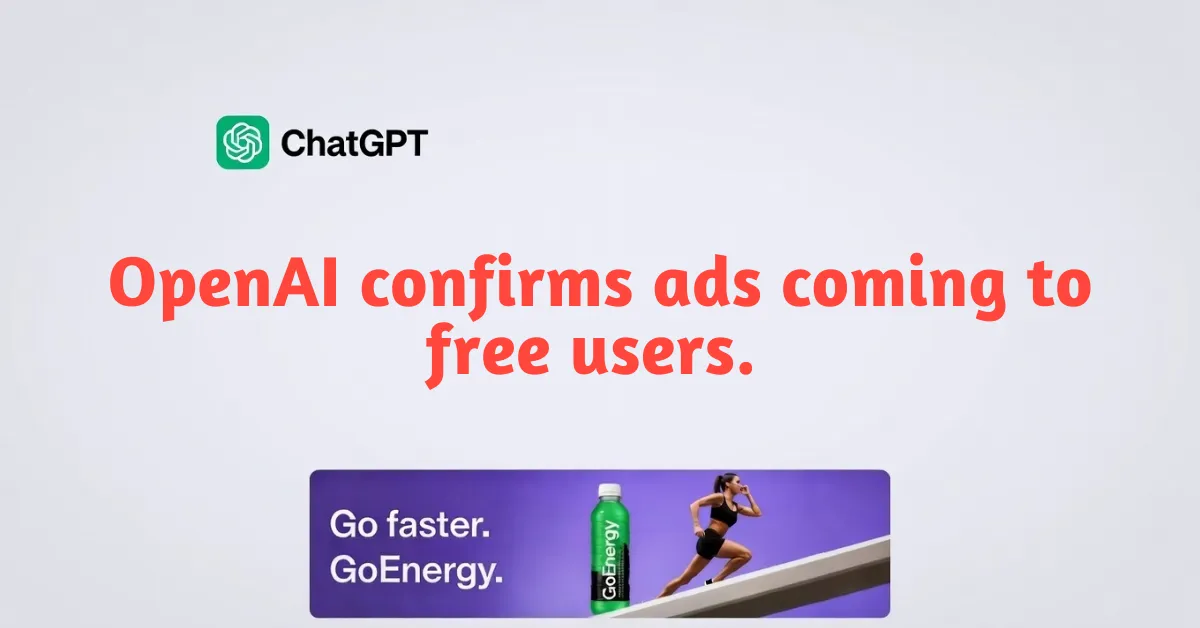
OpenAI made two big announcements today that reveal how most people will experience AI going forward. First, a new $8 monthly subscription called ChatGPT Go is now available worldwide. Second, advertisements are coming to both free and Go users in the United States within weeks.
The timing isn’t coincidental. With the company burning billions annually and projecting $14 billion in losses for 2026, OpenAI needs new revenue streams. The advertising decision represents the clearest admission yet that subscriptions alone can’t support the massive costs of serving 800 million weekly users.
The Middle Ground Between Free and Premium
ChatGPT Go targets the vast space between free users and the $20 monthly Plus subscribers. It offers ten times more messages, file uploads, and image generation than the free tier, along with expanded access to GPT-5.2 Instant. For users who constantly hit limits on the free plan but balk at Plus pricing, Go makes sense.
The tier didn’t start in Silicon Valley. It launched quietly in India last August at roughly $4.50 monthly, designed for markets where $20 subscriptions represent weeks of income. The gamble paid off spectacularly. Go expanded to 170 countries and became OpenAI’s fastest-growing subscription product.
That international success drove the decision to bring Go to the United States and complete the global rollout. OpenAI saw sustained daily usage for writing, learning, image creation, and problem-solving across wildly different economic contexts. Users weren’t treating Go as a backup to Plus. They built it into their workflows as a primary tool.
Pricing reflects regional purchasing power. U.S. users pay $8 monthly while other markets see localized pricing calibrated to local economies. This tiered global approach mirrors strategies Netflix and Spotify pioneered.
With Go now available everywhere ChatGPT operates, OpenAI offers three consumer tiers. Go at $8 for expanded everyday access. Plus at $20 for deeper reasoning and productivity workflows. Pro at $200 for AI power users demanding maximum capabilities. The company says Plus and Pro will remain ad-free, positioning advertisements exclusively in free and Go tiers as the explicit trade-off for lower prices.
Why Advertisements, Why Now
The announcement that OpenAI plans to test advertisements in free and Go tiers came buried in the middle of the Go launch blog post, framed as necessary to “make AI accessible to everyone by helping us keep ChatGPT available at free and affordable price points.”
The economics driving this are stark. OpenAI generated $3.7 billion in revenue during 2024 while posting roughly $5 billion in losses. The company reportedly spends $700,000 daily just operating ChatGPT infrastructure, about $256 million annually before accounting for development costs, staff salaries, or capital expenditures.
Despite securing a record $40 billion funding round in March 2025 that valued the company at $300 billion, OpenAI projects it won’t achieve positive cash flow until 2029. Current financial models show the company spending $46 billion in cash over the next four years while racing toward an ambitious $125 billion revenue target by 2029.
The timing also reflects competitive pressure. Google’s Gemini, Anthropic’s Claude, and emerging players like DeepSeek are all fighting for market share with comparable or superior capabilities in specific domains. Maintaining ChatGPT’s dominant position requires keeping the product accessible while competitors offer free tiers with generous usage limits.
Monetizing free users through advertising has been discussed internally for months. Job postings in September 2024 sought candidates to build an advertising business within ChatGPT. Reports in December confirmed the company was actively exploring ad integration. The January announcement simply made official what industry observers already anticipated.
How the Ads Actually Work
OpenAI provided specific details addressing immediate privacy and trust concerns. Ads will appear at the bottom of ChatGPT responses when there’s a relevant sponsored product or service related to the current conversation. They’ll be clearly labeled and visually separated from organic answers.
Users will be able to learn why they’re seeing particular ads and dismiss advertisements while providing feedback. OpenAI committed that ads won’t influence the actual answers ChatGPT provides, a critical promise since the core value relies on users trusting response quality.
The company established content restrictions designed to limit controversies. No advertisements will appear in accounts where users identify as under 18 or where the system predicts underage usage based on interaction patterns. Ads are explicitly prohibited from appearing near conversations about health, mental health, politics, or other sensitive topics.
Conversations with ChatGPT won’t be shared with advertisers, according to the company. This walks a careful line. While advertisers presumably won’t access chat transcripts, they’ll need some targeting information to make advertising economically viable. The details of how OpenAI balances effective ad targeting with privacy commitments remain unclear.
Initial testing will be limited to logged-in adult users in the United States on free and Go tiers. OpenAI characterized this as experimental, gathering feedback and refining how advertisements integrate before broader deployment.
The New Subscription Landscape
ChatGPT Go creates a tiered access structure mirroring patterns across digital media. Free users get basic access with strict usage limits and advertisements. Go subscribers pay $8 for significantly expanded access but still see ads. Plus subscribers at $20 get advanced models, higher limits, and ad-free experience. Pro users at $200 receive maximum capabilities without advertisements.
This creates natural upgrade paths. Free users hitting limits can choose between tolerating ads for $8 or paying $20 for the full ad-free experience. Go users wanting deeper reasoning capabilities have a clear $12 monthly upgrade path to Plus.
The structure also addresses one of OpenAI’s thorniest challenges: converting its massive free user base into paying customers. Current estimates suggest only 4 to 5 percent of ChatGPT’s 800 million weekly users pay for subscriptions. While 20 million paying subscribers generate substantial revenue, the remaining 95 percent consume resources without directly contributing to costs.
Advertisements offer a mechanism to monetize free engagement without forcing users toward subscription conversions. If even a fraction of free interactions generate advertising revenue, the collective impact at ChatGPT’s scale could be enormous.
However, the economics remain uncertain. Traditional display advertising commands relatively modest rates, typically measured in dollars per thousand impressions. ChatGPT’s value proposition to advertisers remains untested. Unlike search queries that often signal purchase intent, ChatGPT conversations span homework help, creative writing, coding assistance, and countless contexts where commercial relevance may be minimal.
User Reactions and Platform Risk
Initial reactions across social media and tech forums skewed negative. Many users expressed frustration that OpenAI was introducing ads to a paid tier, albeit the lowest-priced one. The phrase “pay for the product and still see ads” circulated widely, with comparisons to cable television’s evolution.
Others questioned whether $8 monthly justified expanded access if advertisements would interrupt the experience. Some threatened to cancel future subscriptions if ads proved intrusive or degraded response quality. Privacy advocates raised concerns about how conversation data might inform targeting even if transcripts aren’t directly shared with advertisers.
The backlash reflects broader consumer fatigue with advertising saturation across digital platforms. After years of ads creeping into previously ad-free services, users have grown skeptical of promises that advertising will remain unobtrusive.
OpenAI faces genuine risks if advertisements alienate the user base that drove ChatGPT to 800 million weekly users in just over three years. The company’s market dominance isn’t guaranteed. Competitors like Claude and Gemini have demonstrated impressive capabilities and aggressive pricing designed to capture disillusioned ChatGPT users.
Platform switching costs for AI assistants remain remarkably low. Unlike social networks where connections create lock-in, users can simply navigate to a different website and start chatting with an alternative AI. If ChatGPT’s advertising implementation proves annoying, competitors stand ready to capture market share.
What This Means Long Term
OpenAI’s move toward advertisements reflects structural economics that will likely shape the entire AI industry. Training and operating frontier AI models requires staggering computational resources that translate into ongoing expenses unmatched by traditional software businesses.
Every ChatGPT conversation consumes GPU cycles, memory, bandwidth, and energy that must be continuously paid for regardless of whether the user generates revenue. This cost structure creates fundamental tension. To maximize impact, AI companies want to offer free or low-cost access. But serving millions of free users generates enormous expenses without corresponding revenue.
The obvious paths involve some combination of subscriptions, advertising, and enterprise licensing. Pure subscription models limit addressable markets. Pure advertising models require massive scale and risk compromising product quality. Enterprise licensing generates substantial revenue but serves narrow segments.
OpenAI’s approach combines all three: free users with ads, low-cost subscriptions with ads, premium subscriptions without ads, and enterprise offerings with custom pricing. This diversification spreads risk while attempting to capture value across different user segments.
Google faces similar dynamics with Gemini. Microsoft’s GitHub Copilot demonstrates how coding assistance can command premium pricing through clear productivity value. Anthropic’s Claude leans heavily on enterprise adoption and API revenue.
No dominant business model has emerged yet. The AI industry is essentially running parallel experiments across different monetization strategies.
The Bottom Line for Users
For users, the practical implications are straightforward. Free tier users in the United States should expect advertisements to begin appearing within weeks, likely by late January or early February 2026. Go subscribers globally can access expanded capabilities immediately for $8 monthly, with U.S. users also anticipating ad integration soon.
Plus and Pro subscribers can expect their ad-free experiences to continue, with OpenAI treating absence of advertising as an explicit premium feature. Business and Enterprise customers maintain ad-free access as part of existing agreements.
The broader question is whether OpenAI can execute advertising integration without degrading user experience or eroding trust. Success depends on whether commitments translate into practice or become hollow promises once revenue pressures intensify.
ChatGPT reached 800 million weekly users by being useful, accessible, and relatively frictionless. Maintaining that position while introducing monetization mechanisms that generate billions without alienating users represents OpenAI’s next major challenge.
The company has demonstrated remarkable ability to push AI capabilities forward. Now it must prove it can build a business model that lasts.