
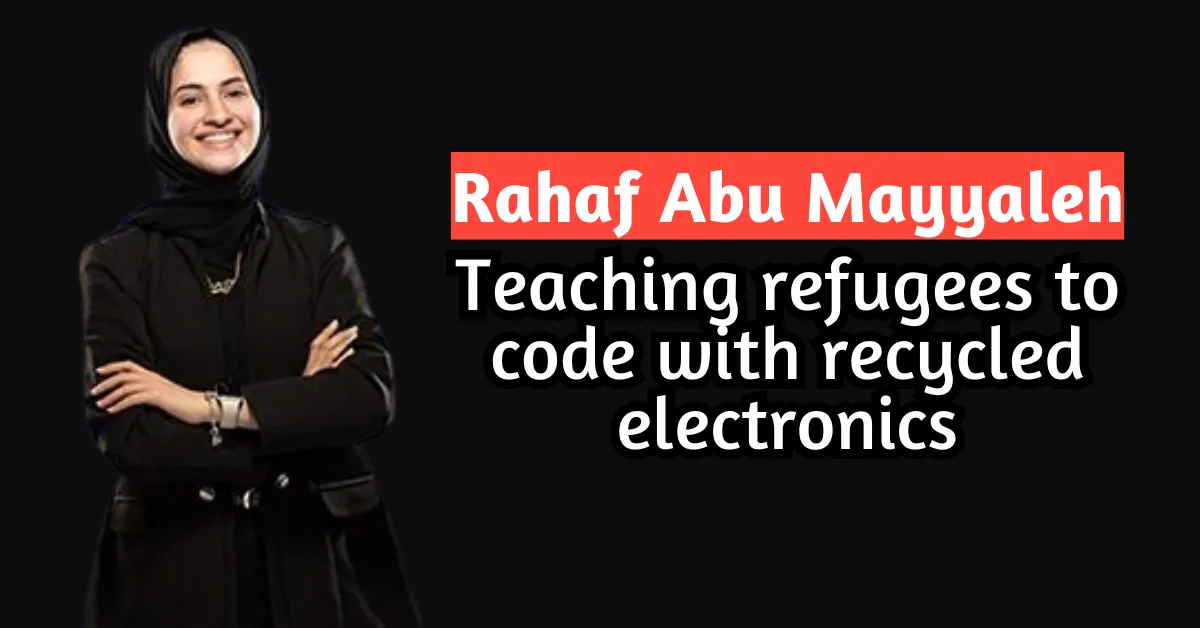
At 23, Rahaf Abu Mayyaleh runs coding workshops across Jordan where students build robots from recyclable materials and electronic components destined for landfills. Her nonprofit IBTKRGO has trained over 750 young people through more than 30 workshops, targeting the communities hit hardest by Jordan’s staggering 40.8% youth unemployment rate.
Samsung and the United Nations Development Programme featured Abu Mayyaleh this week as part of their Generation17 initiative, spotlighting how she’s combining environmental sustainability with technology education in a country where most young people have zero access to either.
“We’re providing them with quality digital education, which is very important for today’s and tomorrow’s job market,” Abu Mayyaleh said in the feature published January 13. The approach is straightforward: students learn programming using micro:bits, small programmable devices designed for teaching coding basics, while building simple robots from materials that would otherwise become waste.
How One Course Changed Everything
Abu Mayyaleh was 15 when a single programming course showed her what technology education could unlock. “It was really the first course I had in robotics,” she recalled. “That experience was a turning point.”
Most young Jordanians never get that chance. Recognizing the gap, she joined friends in 2017 to teach digital skills to underserved youth through informal workshops. What started as a side project evolved into IBTKRGO, formally registered in 2023 and now operating across Jordan with volunteers coordinating classes through Samsung Galaxy devices provided through the Generation17 partnership.
The organization specifically targets vulnerable communities including refugees, addressing a crisis where traditional education systems haven’t kept pace with technology sector demands. Young people end up without pathways to emerging job markets, perpetuating unemployment cycles.
Abu Mayyaleh’s eco-friendly approach tackles multiple problems simultaneously: quality education, decent work and economic growth, and responsible consumption and production. By incorporating recyclable materials and e-waste into educational kits, she demonstrates that environmental sustainability and workforce development can advance together rather than competing for resources.
The Samsung-UNDP Platform
Abu Mayyaleh joined Generation17 in April 2025 as one of five new Young Leaders selected from a competitive global pool. The partnership, launched in 2020, has supported changemakers from over 17 countries working on issues spanning all 17 UN Sustainable Development Goals.
Participants receive Samsung Galaxy technology, mentorship, networking opportunities, and platforms to share their work at high-profile international events. The two-year commitment structure provides sustained support rather than one-time recognition.
The initiative stems from Samsung’s broader commitment to the Global Goals, which began in 2019 with the Samsung Global Goals App. Nearly 300 million users have installed the app on Galaxy devices, generating over $20 million for UNDP’s sustainable development efforts through everyday use.
For Samsung, Generation17 represents corporate social responsibility intersecting with brand positioning. The company provides technology tools while gaining authentic stories of impact that reinforce sustainability messaging. For UNDP, the partnership extends reach and resources while bringing private sector innovation to development challenges.
Regional Ambitions
Abu Mayyaleh isn’t thinking small. “My dream is to expand this work across the Middle East and beyond,” she stated, “to show that when youth have access to tech education and believe in themselves, they become the next generation of leaders and changemakers.”
The timing matters. Jordan’s youth unemployment crisis reflects broader regional challenges where limited digital skills create barriers to economic participation. Technology education represents not just individual opportunity but potential engines for broader economic development across the Middle East.
Whether IBTKRGO achieves regional or global scale remains uncertain. Scaling nonprofit education initiatives requires funding, infrastructure, and partnership networks that take years to build. But the Samsung-UNDP partnership provides visibility and resources that could accelerate that trajectory.
New Generation17 cohort members participate in onboarding at the ECOSOC Youth Forum in New York City before engaging in high-level global events where they contribute youth perspectives to policy dialogues alongside policymakers and innovators. As UNDP Administrator Achim Steiner noted when announcing the 2025 cohort: “With fewer than five years left to achieve the Global Goals, the time to act is now.”
What Success Actually Looks Like
At minimum, the spotlight introduces international audiences to work happening in communities where digital skills training can fundamentally alter young people’s economic prospects. In Jordan and across the Middle East, technology education represents tangible pathways out of unemployment that traditional systems haven’t provided.
Abu Mayyaleh’s story follows previous Generation17 features including Renata Koch Alvarenga from Brazil, who founded EmpoderaClima to advance climate solutions, and Tamara Gondo, who recently presented at Samsung’s Galaxy Tech Forum on sustainability collaboration.
The profile went live as Samsung prepared for major product announcements and corporate positioning around AI and sustainability themes. The strategic timing links consumer technology to tangible social impact, illustrating how mobile devices enable coordination, content creation, and network building for grassroots changemakers.
The Generation17 framework, combining technology provision, mentorship, networking, and global platform access, offers a template for how corporations can support social entrepreneurs beyond traditional philanthropy. Rather than simply donating money, Samsung invests in amplifying young leaders already creating solutions in their communities.
For Abu Mayyaleh, now 23 and operating IBTKRGO workshops across Jordan with over 750 students trained, the recognition validates years of work while opening doors to expanded impact. Technology she teaches and technology she uses to coordinate that teaching both trace back to the same corporate partnership, a cycle Samsung and UNDP hope to replicate across their global network of Young Leaders.
Whether coding education built on recycled electronics can meaningfully address youth unemployment at scale remains to be proven. But in communities where access to technology education is effectively zero, even small interventions create opportunities that didn’t exist before.