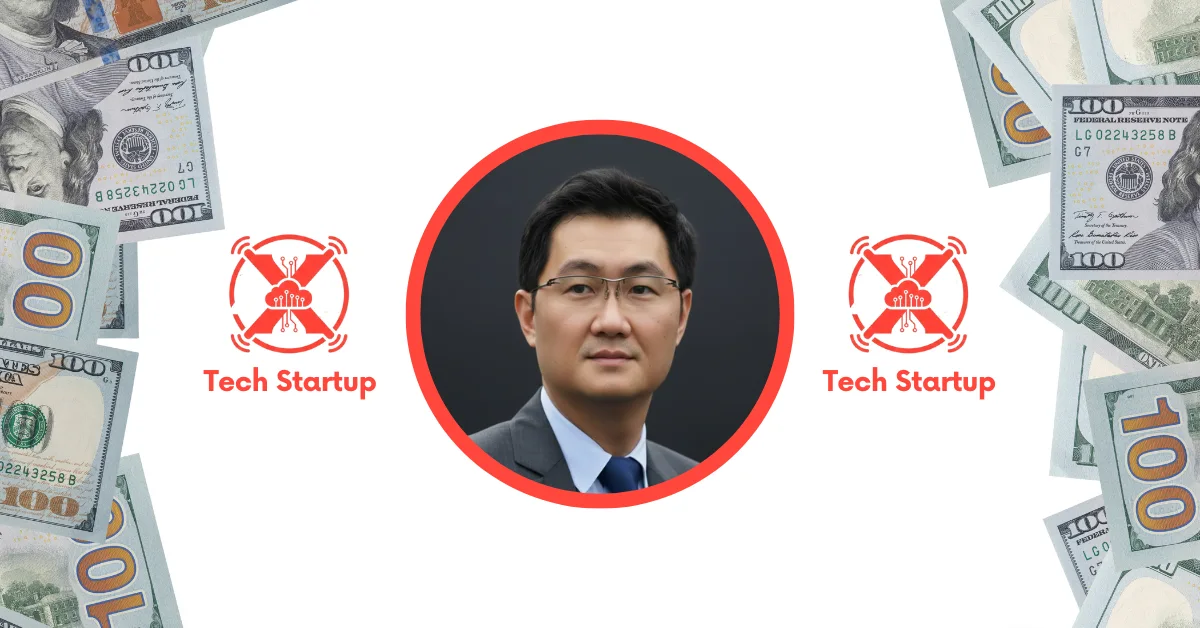
In the constellation of global technology giants, few figures shine as brightly yet remain as enigmatic as Ma Huateng. The founder and CEO of Tencent Holdings, often known by his English nickname “Pony Ma,” has built one of the world’s most influential technology empires. As Ma Huateng’s net worth continues to fluctuate with market dynamics in 2025, his impact on social media, gaming, artificial intelligence, and fintech has cemented his position among the planet’s most powerful business leaders.
From Software Developer to Billionaire Visionary
Born on October 29, 1971, in Chaoyang, Guangdong Province, China, Ma Huateng grew up in a family where his father worked as a port manager in Shenzhen. This early exposure to China’s burgeoning economic zones would prove formative. Ma demonstrated an early aptitude for technology and enrolled at Shenzhen University, where he studied computer science and graduated in 1993 with a Bachelor of Science degree in applied engineering and computer science.
After graduation, Ma’s career began modestly. He took a position with China Motion Telecom Development, where he developed software for pagers and earned less than $200 per month. This hands-on experience in telecommunications technology laid the groundwork for his future innovations. He subsequently worked for Shenzhen Runxun Communications Co. Ltd., continuing his focus on research and development in the rapidly evolving communications sector.
Building Tencent: From QQ to Global Dominance
In 1998, Ma Huateng co-founded Tencent Holdings with four classmates from Shenzhen University. The company’s first major product was OICQ, an instant messaging service that would eventually become QQ. After AOL bought ICQ in 1998 and filed arbitration claiming OICQ’s domain names violated ICQ’s trademark, Tencent lost the case and had to change the name to QQ in December 2000. This setback became a catalyst for expansion.
Rather than being deterred, Ma strategically diversified Tencent’s portfolio. In 2003, the company launched its own portal (QQ.com) and entered the online games market. By 2004, Tencent controlled 74 percent of China’s instant messaging market, prompting Ma to list the company on the Hong Kong Stock Exchange. The June 2004 initial public offering raised $200 million, instantly transforming Ma into one of China’s wealthiest entrepreneurs.
The 2011 launch of WeChat (Weixin in Chinese) marked Tencent’s evolution into a comprehensive digital ecosystem. WeChat transcended simple messaging to become a “super app” integrating social networking, mobile payments, e-commerce, gaming, and countless other services. As of September 30, 2025, the combined monthly active users of Weixin and WeChat reached 1.414 billion, representing approximately one-seventh of the global population.
Ma Huateng Net Worth 2025: Decoding the Billionaire’s Fortune
Determining Ma Huateng’s precise net worth presents challenges due to market volatility, particularly in China’s regulated tech sector. However, multiple authoritative sources provide estimates that paint a comprehensive picture:
2025 Net Worth Estimates
| Source | Net Worth Estimate | Date | Notes |
|---|---|---|---|
| Forbes | $63 billion | November 2025 | Based on Tencent shareholding |
| Bloomberg Billionaires Index | $60-65 billion range | 2025 | Includes 8% Tencent stake |
| Various Financial Publications | $56-73 billion | December 2025 | Range reflects market fluctuations |
As of November 2025, Ma has a net worth of US$63 billion according to Forbes. This valuation reflects both the strength of Tencent’s business performance and the resilience of Ma’s investment strategy amid regulatory challenges and market turbulence.
The variation in estimates stems from several factors. Ma owns his stake through the holding company Advanced Data Services, and the value of his cash investments is based on analysis of dividends, insider transactions, taxes and market performance. Notably, these calculations exclude significant philanthropic contributions, as Ma transferred $2.3 billion worth of Tencent shares to his charitable Ma Huateng Global Foundation in 2016.
The Architecture of Wealth: How Ma Huateng Built His Fortune
Tencent Holdings: The Primary Engine
The overwhelming majority of Ma Huateng’s wealth derives from his approximately 8% stake in Tencent Holdings. As of April 2025, Tencent’s market capitalization stood at $547.28 billion, making it the 16th largest company globally and the largest in China. This equity stake alone accounts for tens of billions in value.
In the third quarter of 2025, Tencent achieved total revenue of RMB192.9 billion ($27.2 billion), marking a 15% year-over-year increase. The company’s diversified revenue streams include:
- Gaming Division: Tencent remains the world’s largest game publisher. Domestic games revenue reached RMB42.8 billion ($6 billion), up 15% year-over-year, while international games revenue surged 43% to RMB20.8 billion. Blockbuster titles like “Honor of Kings,” “Peacekeeper Elite,” and the newly released “Delta Force” continue driving growth.
- Social Networks and Digital Content: WeChat’s dominance in China provides unparalleled monetization opportunities through advertising, subscriptions, and integrated services. Tencent Video maintained 114 million subscriptions, while Tencent Music held 126 million subscriptions in Q3 2025.
- FinTech and Business Services: This segment generated RMB58.2 billion ($8.2 billion) in Q3 2025, with commercial payment volume accelerating as both online and offline payment trends improved.
- Advertising and Marketing Services: Marketing services revenues jumped 21% year-over-year to RMB36.2 billion ($5.1 billion), benefiting from AI-powered ad targeting.
Strategic Investments: The Multiplier Effect
Beyond Tencent’s core operations, Ma has orchestrated strategic investments in a global portfolio of companies that amplify his wealth creation. Tencent holds significant stakes in:
- Gaming Studios: Riot Games (League of Legends), Supercell (Clash of Clans), Epic Games (Fortnite)
- Social and Entertainment Platforms: Snap Inc., Spotify, Discord
- E-commerce and Retail: JD.com, Pinduoduo (PDD)
- Mobility and Technology: Tesla, Nio, various AI startups
These investments not only generate returns but also provide strategic synergies with Tencent’s ecosystem, creating a virtuous cycle of value creation.
Real Estate and Art Collection
Ma owns properties in Hong Kong, and according to Bloomberg, he owns a redeveloped palatial residence of 1,820 square meters (19,600 square feet) in Hong Kong. He also possesses an art collection reportedly worth $150 million, demonstrating sophisticated wealth diversification beyond technology assets.
2025: The AI Investment Surge and Its Impact
Ma Huateng has positioned Tencent at the forefront of artificial intelligence innovation, with massive capital expenditures reflecting his long-term vision. In 2024, Tencent’s capital expenditure reached $10.7 billion, up from $3.4 billion in 2023, with projected 2025 investments hovering between 12% and 14% of revenue.
“Our strategic investments in AI are benefitting us in business areas such as ad targeting and game engagement, as well as in efficiency enhancement areas such as coding, and game and video production,” Ma stated in Q3 2025 earnings. These AI initiatives include:
- Hunyuan Foundation Model: Tencent’s proprietary large language model with industry-leading image and 3D generation capabilities
- Yuanbao AI Assistant: An AI-native application integrated within the Weixin ecosystem
- Automated Ad Campaign Solution (AIM+): AI-powered advertising optimization
- Gaming AI: Enhanced player engagement and content creation
In Q1 2025, Tencent’s R&D investment surged 21% year-over-year to 18.9 billion yuan ($2.63 billion), underscoring the company’s commitment to maintaining technological leadership. The company plans to invest $150 million in Saudi Arabia for its first Middle Eastern data center and $500 million in Indonesia for a third data center in that country.
Navigating Regulatory Challenges and Market Volatility
Ma Huateng’s wealth has experienced significant fluctuations due to China’s regulatory environment. The Chinese government’s crackdown on big tech between 2021 and 2023 resulted in dramatic valuation swings. From its February 2021 peak when Ma’s net worth reached approximately $72 billion, Tencent lost more than two-thirds of its value before bottoming out in October 2022.
Gaming regulations posed particular challenges. In December 2023, when Beijing proposed restrictive gaming measures, Tencent’s share price plummeted 10.3% in a single day. However, the government’s subsequent reversal of the most stringent measures allowed for recovery.
Despite these headwinds, Ma added $14.7 billion to his wealth over a 12-month period ending in November 2024, bringing his net worth to $46.8 billion at that time and regaining his position as China’s second-richest person. The subsequent continued growth through 2025 demonstrates both Tencent’s resilience and Ma’s strategic acumen in navigating complex regulatory landscapes.
Leadership Philosophy: The “Pony” Approach
Ma Huateng’s leadership style combines strategic patience with aggressive execution. His nickname “Pony” derives from the Chinese translation of his surname (马), meaning “horse.” However, this playful moniker belies a calculated, highly effective business approach.
Ma rarely grants interviews to Western media and maintains a notably low public profile compared to other tech billionaires. This discretion has earned him a reputation as mysterious yet methodical. One analyst described him as “like a scorpion—he doesn’t talk much but is always thinking about strategy.”
His business philosophy emphasizes several core principles:
Localization and Innovation: Ma has stated, “Copying others can’t make you great. The key is how to localize a great idea and create domestic innovation.” This principle guided Tencent’s transformation of international concepts into uniquely Chinese products that dominate their markets.
Execution Over Ideas: Recognizing China’s hyper-competitive environment, Ma noted, “In China, you can have hundreds of competitors within the first hours of going live. Ideas are not important in China—execution is.”
Long-term Value Creation: Rather than pursuing short-term gains, Ma has consistently invested in building ecosystems and platforms that generate compounding value over decades.
Strategic Patience: Ma’s willingness to weather regulatory storms and market downturns while maintaining investment in innovation has proven crucial to Tencent’s sustained success.
Global Recognition and Industry Influence
Ma Huateng’s contributions to technology and business have earned widespread recognition:
- Time Magazine’s Most Influential People: Named in 2007, 2014, and 2018
- Forbes Rankings: Ranked #8 on “Richest People in Tech” (2017), #27 on “World’s Most Powerful People” (2018), #4 on “China’s 100 Richest” (2022)
- Political Roles: Served as deputy to the 5th Shenzhen Municipal People’s Congress and delegate in the 12th National People’s Congress
Ma became the first Asian to crack Forbes’ global top-10 richest list, a testament to both his personal wealth and Tencent’s global significance. His influence extends beyond wealth to shaping how billions of people communicate, play, pay, and interact in the digital realm.
Tencent’s impact on the gaming industry is particularly profound. The company’s strategic acquisitions and investments have reshaped the global gaming landscape, with Tencent-backed titles generating billions in revenue annually and reaching hundreds of millions of players worldwide.
Philanthropy and Social Responsibility
Despite his immense wealth, Ma maintains a relatively private personal life. He is married to Wang Dan-Ting and has one daughter, Ma Manlin. In 2016, Ma transferred $2.3 billion worth of Tencent shares to the Ma Huateng Global Foundation, his charitable foundation.
Tencent has also launched various social initiatives, including the Tencent Charity Platform, which connects donors, charitable organizations, and enterprises. The company proposed increasing its annual dividend by 32% for 2025 to HKD 4.50 per share (approximately HKD 41 billion), demonstrating commitment to shareholder returns alongside social investment.
Future Outlook: Positioning for the Next Decade
As 2025 progresses, several factors will influence Ma Huateng’s net worth trajectory and Tencent’s continued dominance:
AI Integration and Monetization: The substantial investments in AI infrastructure and capabilities position Tencent to capture value from the artificial intelligence revolution. The success of AI-powered advertising, gaming enhancements, and new AI-native products will be crucial.
International Expansion: Tencent’s gaming success demonstrates the potential for global growth beyond China’s borders. Expanding cloud services into Europe and other markets could unlock significant new revenue streams.
Regulatory Environment: The Chinese government’s evolving approach to tech regulation will continue to impact Tencent’s operations and valuation. Ma’s track record of navigating these challenges provides some confidence.
Market Conditions: Stock analysts have set target prices suggesting potential upside, with some projections pointing to 710 HKD per share, which would significantly increase Ma’s net worth if achieved.
Gaming Innovation: New titles and the integration of AI into game development could drive continued growth in Tencent’s most profitable segment.
Conclusion: A Legacy Beyond Billions
Ma Huateng’s journey from a software developer earning less than $200 monthly to a tech titan worth over $60 billion exemplifies the transformative potential of vision, timing, and execution. His net worth, while impressive, represents only one dimension of his impact. Through Tencent, Ma has fundamentally altered how billions of people interact with technology, communicate with each other, and experience digital entertainment.
As artificial intelligence reshapes the technology landscape and global markets evolve, Ma Huateng’s strategic investments and leadership position him to remain among the world’s wealthiest and most influential individuals. For investors, tech enthusiasts, and industry observers, tracking Ma Huateng’s net worth and Tencent’s trajectory offers insights into the future of social media, gaming, AI, and the broader digital economy.
The story of Ma Huateng and Tencent continues to unfold, with each quarter bringing new developments in this saga of innovation, wealth creation, and technological transformation. As we progress through 2025 and beyond, the “Pony” who built an empire from instant messaging shows no signs of slowing down—continuing to gallop toward new frontiers in the digital revolution.