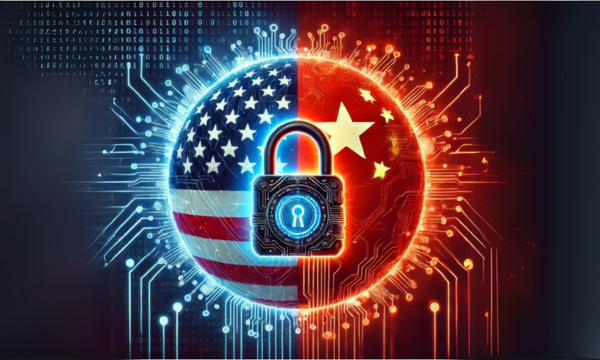
The U.S.-China tech rivalry has reached new heights as the United States adds over 50 Chinese companies to its export blacklist. This move, aimed at curbing China’s advancements in artificial intelligence (AI) and other critical technologies, underscores growing national security concerns and escalating trade tensions. But beyond political posturing, these restrictions could reshape the global tech industry in unexpected ways.
Why the U.S. Is Tightening Its Grip on China’s Tech Sector
The U.S. government has long been wary of China’s rapid strides in AI, quantum computing, and advanced semiconductor technology—areas with both commercial and military applications. By expanding its blacklist to include more than 80 foreign entities (with over 50 from China), the Biden administration is making it clear: it won’t allow China easy access to cutting-edge U.S. technology.
Commerce Secretary Gina Raimondo emphasized that these measures are designed to protect national security, stating, “We will not allow adversaries to exploit our technologies for military advancements.” While this approach aligns with previous efforts—such as the Trump administration’s bans on Huawei and restrictions on Nvidia’s AI chips—it also raises concerns about how these policies will impact global supply chains.
Who’s on the Blacklist? The Biggest Losers
Among the companies affected, some big names stand out. The Beijing Academy of Artificial Intelligence and subsidiaries of Inspur Group—China’s leading server manufacturer and a key customer of U.S. chip giants like Nvidia, Intel, and AMD—are now facing strict limitations. This means they may struggle to acquire high-performance computing technology, setting back China’s AI and defense initiatives.
China’s Response: Trade War or Innovation Boom?
Predictably, China is not happy. The country’s Foreign Ministry condemned the move as an “abuse of trade policies” and accused the U.S. of trying to suppress China’s rise in global technology leadership. However, this isn’t just about politics—China has been working toward self-sufficiency in semiconductor production for years. With companies like SMIC (Semiconductor Manufacturing International Corporation) ramping up efforts, these restrictions might accelerate China’s push to develop homegrown alternatives.
The Impact on U.S. Tech Companies: A Double-Edged Sword
While the restrictions are meant to hurt China, they also have unintended consequences for American tech firms.
- Nvidia, which has already been affected by previous export controls on AI chips, saw its stock dip by 5.7% after news of the latest blacklist.
- Intel and AMD face similar risks, as China has been one of their biggest markets.
- Apple has also been under pressure, with Beijing urging government employees to stop using iPhones—potentially impacting its sales in China.
This raises the question: Will these restrictions ultimately backfire by pushing China to accelerate its own innovations, leaving U.S. firms locked out of a massive market?
A Bigger Picture: What This Means for the Future of Global Tech
Looking beyond short-term disruptions, these policies set the stage for a deeper divide in the global tech landscape. If the U.S. and its allies continue limiting China’s access to advanced semiconductors and AI technologies, we could see the emergence of two competing technology ecosystems—one led by the U.S. and its partners, the other driven by China’s domestic innovations.
Some experts believe this fragmentation could slow down global advancements in AI and semiconductor technology, as collaboration across borders becomes more difficult. Others argue that competition will fuel innovation, with China investing more heavily in self-reliance while the U.S. strengthens partnerships with allies like Taiwan, Japan, and South Korea.
What’s Next?
With both countries standing firm, the road ahead is uncertain. The U.S. may introduce even stricter regulations in the coming months, while China is expected to retaliate with its own measures. Meanwhile, global tech companies must navigate an increasingly complex landscape, balancing compliance with U.S. laws while maintaining access to one of the world’s biggest markets.
For now, one thing is clear: the U.S.-China tech battle isn’t slowing down anytime soon.