
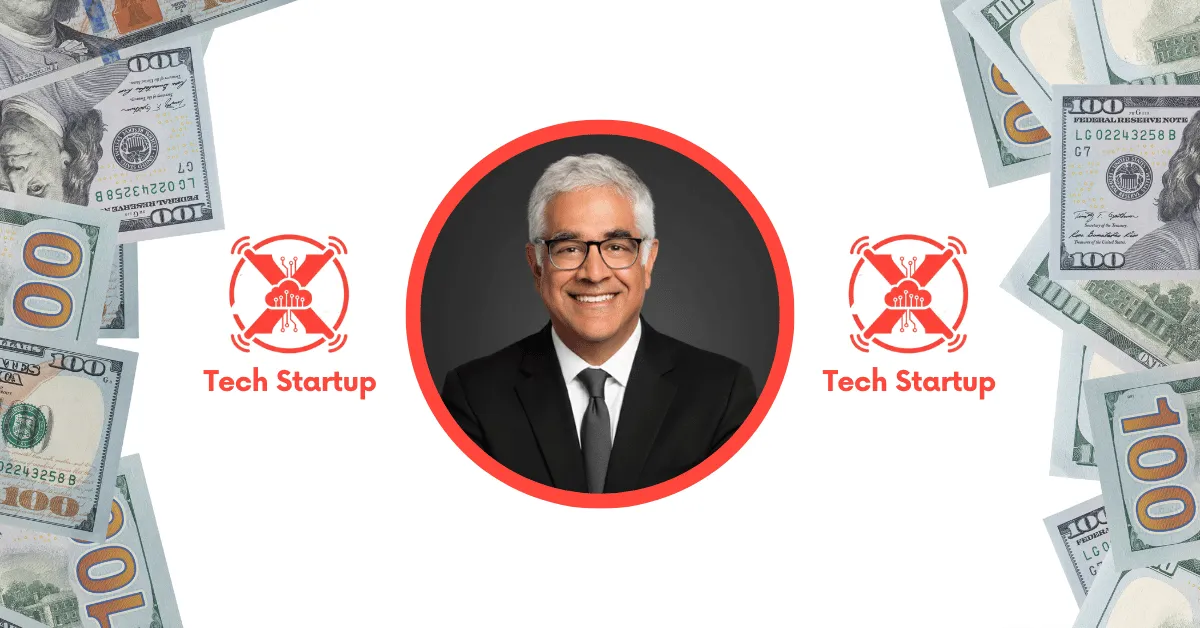
Aneel Bhusri represents enterprise software’s new generation—a billionaire who transformed corporate revenge into cloud computing revolution. As co-founder and Executive Chairman of Workday, and partner at legendary venture capital firm Greylock Partners, Bhusri has positioned himself at the intersection of operational excellence and strategic investment. With an estimated net worth of $3 billion as of December 2025, this Brown and Stanford-educated engineer turned two painful experiences—watching PeopleSoft’s hostile takeover by Oracle—into one of Silicon Valley’s most successful comeback stories. His dual roles as Workday’s guiding force and Greylock’s enterprise software expert have generated billions in value while reshaping how organizations manage their workforce in the AI era.
From Pittsford to Ivy League: Engineering and Business Foundations
Born February 14, 1966, in Pittsford, New York, a Rochester suburb, Aneel Bhusri grew up in an Indian-American family of Punjabi descent. His upbringing emphasized education and achievement—values that propelled him toward elite universities and eventual tech leadership. After graduating from Pittsford Mendon High School, Bhusri enrolled at Brown University, where he pursued an ambitious dual degree program.
At Brown, Bhusri earned a Bachelor of Science degree combining electrical engineering and economics—a rare interdisciplinary path that provided both technical depth and business understanding. This combination would prove essential throughout his career, enabling him to bridge the gap between engineering possibilities and market realities that many technologists struggle to navigate.
Following Brown, Bhusri began his professional career at Morgan Stanley, working as a corporate finance analyst from 1989 to 1992. This Wall Street experience exposed him to financial modeling, corporate valuation, and deal structuring—skills that would later inform his approach to building and scaling software companies. However, Bhusri recognized that finance wasn’t his ultimate destination. He returned to school, enrolling at Stanford Graduate School of Business, where he earned his MBA and absorbed Silicon Valley’s entrepreneurial culture.
PeopleSoft: Rising Through Enterprise Software’s First Wave
In 1993, fresh from Stanford, Bhusri joined PeopleSoft as director of planning. PeopleSoft, founded in 1987 by David Duffield and Ken Morris, had pioneered client-server human resources software, displacing mainframe systems with more flexible, user-friendly applications. The company was experiencing rapid growth as organizations modernized their HR technology infrastructure.
Bhusri quickly distinguished himself at PeopleSoft. His combination of technical understanding, strategic thinking, and business acumen caught founder David Duffield’s attention. Over six years, Bhusri rose through the ranks, eventually becoming Senior Vice President responsible for product strategy, business development, and marketing. By 1999, at just 33 years old, he was promoted to Vice Chairman—PeopleSoft’s second-highest executive position. He departed full-time employment that year but remained on the board of directors, maintaining his connection to the company while pursuing new opportunities.
During Bhusri’s tenure, PeopleSoft grew into the world’s second-largest enterprise application software company, trailing only Germany’s SAP. The company’s software managed HR, payroll, benefits, and financial operations for thousands of organizations globally. PeopleSoft’s success made it an attractive acquisition target—a reality that would soon transform Bhusri’s career trajectory in unexpected ways.
The Oracle Takeover: Catalyst for Reinvention
In June 2003, Oracle Corporation launched a hostile takeover bid for PeopleSoft, initially offering $5.1 billion ($16 per share). PeopleSoft’s board, including Bhusri, rejected the offer as inadequate and strategically harmful. What followed was an 18-month battle that became one of technology’s most contentious acquisitions.
Oracle CEO Larry Ellison raised the bid multiple times while PeopleSoft’s leadership fought to maintain independence. The U.S. Department of Justice sued to block the acquisition on antitrust grounds, arguing it would create excessive market concentration in enterprise software. Despite these obstacles, Oracle persisted. In December 2004, after PeopleSoft shareholders began accepting Oracle’s offers, the board agreed to a definitive acquisition at $26.50 per share—approximately $10.3 billion total.
The acquisition proved devastating for PeopleSoft employees and customers. Oracle immediately announced plans to discontinue PeopleSoft product lines, forcing customers onto Oracle software. Thousands of PeopleSoft employees lost their jobs as Oracle eliminated redundant positions. For Bhusri, watching his professional home dismantled was personally and professionally traumatic. However, from this destruction emerged opportunity.
Workday: Cloud Software Vindication
Just months after the Oracle acquisition closed in January 2005, Bhusri and David Duffield began planning their comeback. In March 2005, they co-founded Workday, Inc., with a revolutionary premise: rebuild enterprise HR and financial software entirely for the cloud computing era, avoiding the on-premise installations that characterized PeopleSoft and all existing competitors.
Workday’s founding represented both vindication and innovation. Rather than simply recreating PeopleSoft, Bhusri and Duffield envisioned software-as-a-service (SaaS) delivery where customers accessed applications through web browsers rather than installing software on their servers. This model provided continuous updates, lower upfront costs, superior flexibility, and eliminated the complex upgrade cycles plaguing traditional enterprise software.
Greylock Partners, where Bhusri had become a partner in 1999, provided initial funding—making Workday one of Greylock’s portfolio companies. This arrangement created potential conflicts that Bhusri navigated carefully, eventually focusing full-time on Workday’s operational leadership while maintaining his Greylock partnership.
Bhusri served as CEO from Workday’s founding through January 2024, when he transitioned to Executive Chairman while Carl Eschenbach assumed the CEO role. This 19-year CEO tenure saw Workday transform from startup to enterprise software giant.
Workday’s Milestones Under Bhusri’s Leadership:
- 2006: Launched first Workday Human Capital Management product
- 2012: IPO on New York Stock Exchange (ticker: WDAY) at $28 per share, surging 72% on opening day
- 2015: Expanded into financial management applications
- 2020: Achieved $4 billion annual revenue milestone
- 2025: Revenue approaching $9 billion with 11,000+ enterprise customers
- Current: Market capitalization exceeding $70 billion
As of Q3 fiscal 2026 (ended October 2025), Workday demonstrates sustained momentum: subscription revenue of $2.244 billion (up 14.6% year-over-year), total revenue of $2.432 billion, subscription backlog of $25.96 billion (up 17%), and non-GAAP operating margins expanding to 28.5%. The company projects fiscal 2026 subscription revenue of $8.83 billion.
Bhusri’s leadership philosophy emphasized company culture alongside financial performance. He personally interviewed Workday’s first 500 employees, shaping an organizational culture that has earned numerous “best workplace” recognitions. This attention to culture differentiated Workday from competitors and attracted top talent away from established vendors.
Greylock Partners: Venture Capital Excellence
Parallel to building Workday, Bhusri has maintained his partnership at Greylock Partners since 1999—making him among Silicon Valley’s rare individuals who simultaneously operates a major company while investing in competitors and complementary businesses. Greylock, founded in 1965, ranks among venture capital’s most prestigious firms, with investments in transformative companies across multiple technology waves.
As a Greylock partner, Bhusri focuses on enterprise software, cloud computing, and SaaS investments—areas where his operational expertise provides strategic advantage. His investment thesis emphasizes companies disrupting traditional on-premise systems with cloud-based alternatives, exactly the strategy Workday executed successfully.
Notable Greylock Investments During Bhusri’s Partnership:
- Facebook (2006): Early investment at $500 million valuation, now worth hundreds of billions
- Airbnb (2009): Invested when the concept seemed absurd; now valued at $75+ billion
- LinkedIn: Social networking for professionals; acquired by Microsoft for $26.2 billion
- Dropbox: Cloud storage pioneer; successful IPO in 2018
- Pure Storage: Data storage infrastructure; successful IPO, Bhusri serves on board
- Cloudera: Big data analytics platform; Bhusri served on board
- Pandora: Cloud-based music streaming
- Palo Alto Networks: Cybersecurity leader
- AppDynamics: Application performance management; acquired by Cisco for $3.7 billion
Bhusri has been named to the Forbes Midas List—recognizing top venture capital investors—six times since 2008. His ability to evaluate enterprise software opportunities, informed by decades of operational experience, makes him one of Greylock’s most valuable partners. Unlike purely financial investors, Bhusri provides portfolio companies with strategic guidance on product development, go-to-market strategies, and organizational scaling based on his Workday experiences.
The Greylock role also creates interesting dynamics. Bhusri invests in companies that could compete with Workday or become acquisition targets. He navigates these potential conflicts through disclosure, recusal from conflicting decisions, and maintaining clear boundaries between his Greylock and Workday responsibilities.
Aneel Bhusri Net Worth 2026: Sources and Trajectory
Aneel Bhusri’s estimated net worth stands at approximately $3 billion as of late 2025, with various sources reporting figures between $2.89 billion and $3.3 billion. Unlike some tech billionaires whose wealth stems from a single source, Bhusri’s fortune combines his substantial Workday stake with Greylock investment returns.
Primary Wealth Components:
Workday Holdings (Approximately 40-50% of net worth): According to SEC filings, Bhusri owns approximately 595,077 shares of Workday stock directly as of September 2025, worth approximately $134 million at recent trading prices. However, this represents only his direct holdings. Including indirect holdings through family trusts and other structures, his total Workday stake is estimated significantly higher. Bhusri has sold 56,109 shares since 2021 for approximately $11.8 million, following a pattern of gradual monetization while maintaining his major shareholder position.
Greylock Investment Returns (30-40% of net worth): Bhusri’s 26-year partnership at Greylock has generated substantial returns through successful exits and IPOs. His stakes in Facebook, Airbnb, LinkedIn, Dropbox, and numerous other portfolio companies have created wealth independent of Workday. Bhusri also serves as Director and 10% owner of Pure Storage Inc, owning approximately 1.38 million shares worth over $80 million.
Board Compensation and Other Holdings (10-20% of net worth): Bhusri has served on multiple corporate boards, including Intel Corporation (2014-2019) and General Motors (appointed 2020), receiving substantial director compensation. He also holds cash, real estate, and other investments accumulated through decades of income and strategic asset management.
Giving Pledge Commitment: In 2018, Bhusri and his wife Allison Thoreson Bhusri joined the Giving Pledge, committing to donate the majority—over half—of their wealth to charitable causes either during their lifetimes or through their wills, representing a substantial allocation exceeding $1.5 billion toward philanthropy.
Projected 2026 Outlook: Bhusri’s net worth trajectory depends primarily on Workday’s stock performance and Greylock portfolio outcomes. With Workday’s strong AI positioning and 14% subscription revenue growth, conservative estimates suggest his net worth could reach $3.2-3.5 billion by late 2026, assuming Workday maintains current growth rates and no major Greylock exits materially impact his wealth.
Philanthropy and Social Impact
Beyond wealth accumulation, Bhusri has demonstrated commitment to charitable causes aligned with education, technology access, and economic inequality. In April 2020, Bhusri donated $1 million to the Give2SF fund, providing relief to San Francisco residents and small businesses impacted by the COVID-19 pandemic.
His philanthropic focus includes organizations such as Teach for America (Bay Area chapter), Jumpstart, Harlem Children’s Zone, and Tipping Point Community, which address poverty alleviation and opportunity gaps. The Giving Pledge commitment ensures the majority of his wealth will ultimately support charitable purposes rather than remaining within his family.
Awards and Recognition
Bhusri’s achievements have earned substantial recognition: EY Entrepreneur of the Year Award (Northern California, 2013), Great Place to Work CEO For All Leadership Award (2020), SFGATE Visionary of the Year Award nominee (2015), Forbes Midas List six times since 2008, and Forbes 400 ranking (No. 359 in 2020).
Conclusion: Dual Excellence in Operations and Investment
Aneel Bhusri’s $3 billion net worth tells a story of transformation: turning PeopleSoft’s painful acquisition into Workday’s cloud computing triumph while simultaneously building one of venture capital’s most successful enterprise software investment portfolios. His transition from Workday CEO to Executive Chairman in 2024 positions him to focus more attention on strategic guidance, board governance, and potentially increased Greylock activities.
At 58 years old, Bhusri represents a unique model: the operator-investor who excels at both building companies and identifying the next generation of winners. As AI transforms enterprise software—with Workday launching over 350 AI features and generating $50+ million in incremental AI contract value in 2025—Bhusri’s dual roles position him to shape this transition both operationally at Workday and strategically through Greylock investments. His legacy will extend beyond personal wealth to the cloud computing revolution he helped pioneer and the countless companies his investments enabled.