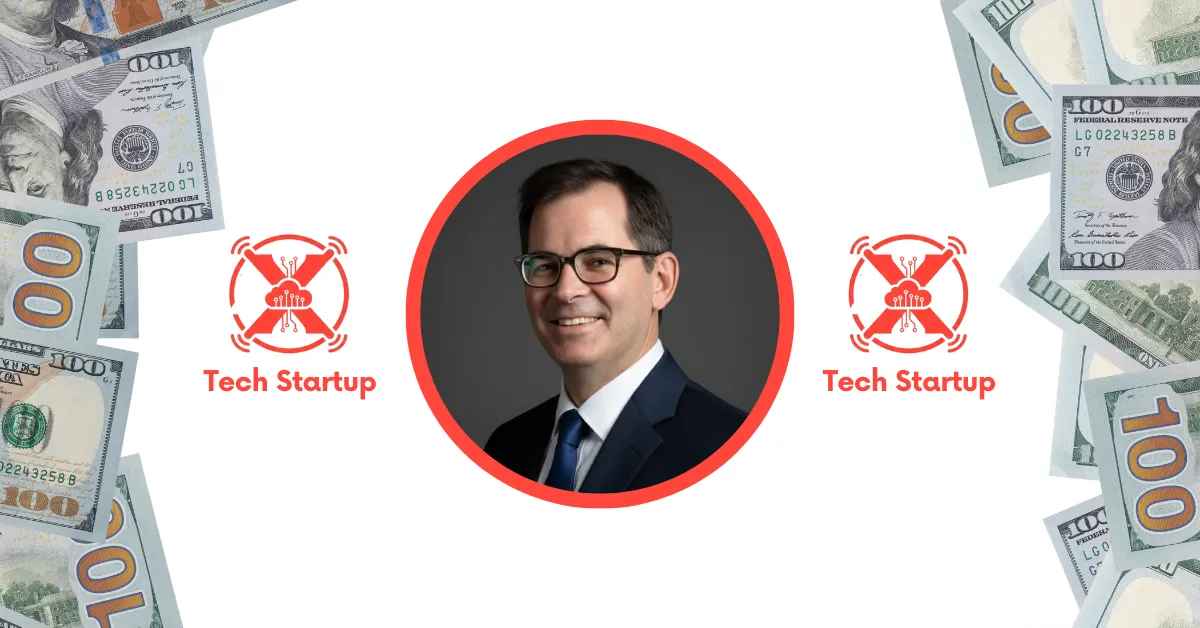
Michael Intrator: The Political Science Grad Who Built a $39 Billion AI Empire
Most tech CEOs have computer science degrees. Michael Intrator studied political science at Binghamton University and spent 20 years trading carbon credits and natural gas. Today, at 56, he runs CoreWeave, the $39 billion AI infrastructure company powering ChatGPT and some of the world’s most advanced AI models.
His journey from failed hedge fund manager to tech billionaire proves you don’t need a Stanford degree to win in AI. You just need to recognize opportunities everyone else misses and know when to double down.
From $10 Billion to Reality
Here’s what nobody tells you about paper wealth. In June 2025, Bloomberg pegged Intrator’s net worth at $10.3 billion when CoreWeave stock hit $183. That made him the 311th richest person in the world overnight.
Today, January 16, 2026? CoreWeave trades around $98.75 with a market cap of roughly $39 billion. The stock is still up 125% since the March 2025 IPO, but it’s down nearly 50% from those dizzying June highs. Multiple law firms have opened securities class action lawsuits. Insider selling is heavy. Goldman Sachs initiated coverage with a neutral rating.
Intrator’s actual net worth today likely sits between $4 to $5 billion, accounting for his stake dilution, ongoing stock sales, and the massive volatility. One source estimates his holdings based on SEC filings at just $8.6 million as of January 14, 2026, though this appears to reflect only recent disclosed transactions rather than total ownership.
The wild swings teach a brutal lesson: tech billionaire wealth on paper can evaporate faster than it appears.
The Grandfather’s Garage That Changed Everything
Intrator’s background reads nothing like typical Silicon Valley. He earned a political science degree from Binghamton University and a Master of Public Administration from Columbia, focusing on environmental policy. His career path pointed toward government work, not tech billions.
From 1998 to 2014, he worked at Natsource Asset Management, eventually becoming Principal Portfolio Manager. The firm specialized in environmental markets where climate policy met finance, managing over $1.2 billion in assets at its peak.
In 2013, Intrator co-founded Hudson Ridge Asset Management, a natural gas hedge fund, bringing Brian Venturo aboard as portfolio manager. They built machine learning models to trade energy markets. Then fracking flooded the natural gas market. Prices collapsed. The fund closed in early 2018.
Instead of finding another trading job, Intrator and partners explored cryptocurrency mining. In 2017, they founded Atlantic Crypto Corp and started with one GPU on a pool table in a Wall Street office. When crypto crashed in 2018 and Ethereum plummeted from $1,400 to $80, Intrator saw opportunity while everyone panicked.
He aggressively bought distressed GPUs at fire sale prices. By early 2019, Atlantic Crypto controlled thousands of GPUs purchased for pennies on the dollar. Operations moved to Venturo’s grandfather’s garage in New Jersey. One GPU turned into hundreds, then tens of thousands.
The Pivot That Built Billions
In 2019, facing Ethereum’s shift to proof of stake that would make GPU mining obsolete, Intrator renamed the company CoreWeave and explored alternatives. Initially they targeted visual effects rendering. The business was steady but not transformative.
The breakthrough came through EleutherAI, an open source group working on large language models. CoreWeave offered free GPU access just to learn about AI training workloads. That goodwill created a pipeline of paying customers right as ChatGPT sparked the AI boom in November 2022.
Intrator made two prescient bets in 2022. First, CoreWeave invested $100 million in Nvidia H100 pre orders before ChatGPT even launched. When the AI boom hit, CoreWeave had inventory competitors couldn’t access. Second, OpenAI selected CoreWeave as an infrastructure partner, attracted by their ability to rapidly deploy thousands of A100 GPUs with InfiniBand networking.
In April 2023, Nvidia invested $100 million in CoreWeave. This wasn’t just capital. The partnership gave CoreWeave preferential GPU allocation while Amazon, Google, and Microsoft built their own chips. Nvidia now maintains approximately 6% equity stake.
The Rollercoaster IPO
By 2024, CoreWeave generated $1.92 billion in revenue, up 737% year over year, though it reported an $863 million loss. The company planned a blockbuster IPO targeting $47 to $55 per share.
Investor skepticism forced them to cut the offering. CoreWeave priced at $40 on March 27, 2025. The stock opened at $39 and closed at $40 in a tepid debut. Intrator told CNBC there were a lot of headwinds in the macro and they definitely had to scale or rightsize the transaction for where the buying interest was.
Then everything changed. Three months later, CoreWeave stock surged to $183, jumping almost 300% from IPO. Intrator’s net worth hit $10.3 billion in just 12 days, according to Bloomberg. His co founders also became billionaires. Brian Venturo hit $6.4 billion. Brannin McBee reached $4.7 billion.
All three founders pocketed over $150 million each by cashing out shares before the IPO, systematically monetizing while maintaining alignment with shareholders.
The Commodities Trading Edge
Here’s what makes Intrator’s story fascinating. None of the three founders came from tech backgrounds. They came from finance, specifically commodities trading. That background gave them unique advantages for building AI infrastructure.
Commodity traders understand capital intensive businesses. They know how to manage complex procurement. They think about supply demand dynamics and depreciation curves. When they approached crypto mining, they analyzed production economics like commodity traders, not hobbyists.
When the 2018 crash hit, Intrator applied trader discipline. Buy distressed assets during panic. Scale aggressively during downturns. Build infrastructure for a future you can’t yet see. Those instincts built the foundation for a $39 billion company.
Today’s Reality: Growth Amid Chaos
As of January 2026, CoreWeave operates as one of America’s fastest growing AI infrastructure providers. Third quarter 2025 revenue reached $1.4 billion, up 134% year over year. The company serves OpenAI, Microsoft, and dozens of AI companies building the next generation of models.
In March 2025, OpenAI signed a five year cloud computing contract worth approximately $12 billion with CoreWeave. Microsoft accounted for 62% of 2024 revenue. CoreWeave’s revenue backlog stands at $55.6 billion as of September 30, 2025, up from $30.1 billion just three months earlier.
Analysts expect CoreWeave’s revenue to more than double in 2026 to almost $12 billion. The company operates 32 data centers with 250,000 GPUs, up from 13 data centers in 2024.
But the growth comes with massive challenges. CoreWeave reported $1.9 billion in capital expenditures in Q3 alone, guiding to $12 to $14 billion for full year 2025. Long term debt surged to over $18.4 billion from virtually nothing. In early January 2026, CoreWeave priced $2.25 billion in convertible notes, up from an originally announced $2 billion.
Free cash flow is negative $8 billion over the past four quarters. The company borrows aggressively to fund hardware purchases. Critics worry about financial sustainability.
The Execution Pressure
Stock volatility reflects execution concerns. CoreWeave stock fluctuated between $95.80 to $98.95 on January 16, 2026, within its 52 week range of $33.52 to $187. JPMorgan downgraded CoreWeave citing supply chain delays affecting revenue timing.
Multiple securities class action lawsuits have been filed, with law firms investigating claims on behalf of investors who purchased CoreWeave stock. Heavy insider selling in early January raised eyebrows. Chief Development Officer Brannin McBee sold over $10 million worth of shares.
Customer concentration remains extreme. Seventy seven percent of 2024 revenue came from the top two clients. If Microsoft or OpenAI shift to internal infrastructure, CoreWeave faces existential risk.
Competition intensifies. Amazon, Google, and Microsoft build their own AI infrastructure. Startups like Lambda Labs compete for similar customers. CoreWeave must execute flawlessly to maintain advantages.
The Leadership Philosophy
Intrator brings unusual perspectives to tech leadership. During a period of uncertainty for crypto, Intrator took a calculated risk by scaling up GPU capacity at the height of peak panic pricing, and that risk paid off in 2023 when demand for CoreWeave’s tech surged.
He told Fortune he doesn’t really care where the stock is today or tomorrow or the day after, but fundamentally believes the business model, software solutions, capacity to build and deliver, and demand will lead to enormous value over time.
We are built for speed, he said. That is all we do, right? And when you build something to do one thing, you end up with a Lamborghini, not a minivan. This single minded focus on GPU infrastructure defines CoreWeave’s strategy.
Despite his billions, Intrator maintains relatively low public profile compared to typical tech CEOs. He’s based out of Brooklyn, New York, far from Silicon Valley glamour. He recently revealed on LinkedIn he’s married with children on the way.
What Happens Next
Looking through 2026, Intrator’s net worth could range from $3 billion to $8 billion depending on CoreWeave’s execution and stock performance. Some analysts predict CoreWeave stock could double in 2026 if the company executes its growth plans. Others worry about debt burden and competitive pressure.
Best case: CoreWeave successfully converts its $55.6 billion backlog to revenue, demonstrates a path to profitability, and the stock rebounds toward $150 to $180. Intrator’s stake reaches $7 to $8 billion. Base case: Revenue grows to $12 billion in 2026 but profitability remains distant. Stock trades between $80 to $120. Net worth stays between $4 to $6 billion. Worst case: Execution challenges worsen, customer concentration concerns intensify, or hyperscaler competition erodes margins. Stock falls toward $50 to $70. Net worth declines to $3 to $4 billion.
The systematic stock sales by all three founders suggest they recognize execution risks. By converting hundreds of millions to cash before and during 2025, they’ve ensured financial security regardless of CoreWeave’s trajectory.
The Takeaway
Michael Intrator’s estimated $4 to $5 billion net worth represents one of tech’s most improbable success stories. A political science major who spent two decades in environmental markets and natural gas trading pivoted through cryptocurrency mining to AI infrastructure, becoming a billionaire in the process.
His journey offers clear lessons. Domain expertise transfers across industries in unexpected ways. Commodities trading skills like understanding capital intensive infrastructure, managing complex supply chains, and analyzing supply demand imbalances proved more valuable for building AI infrastructure than traditional tech experience.
Timing and luck matter immensely. Intrator’s decision to buy distressed GPUs during crypto winter positioned CoreWeave perfectly for the AI boom. His willingness to pivot from failed ventures rather than stubbornly persist separated success from failure.
As AI transforms every industry, the infrastructure powering this transformation generates enormous value. CoreWeave’s $55.6 billion backlog demonstrates persistent demand. Whether Intrator can convert this opportunity into sustainable profits and maintain his billionaire fortune remains the defining question for 2026.
For now, the former hedge fund manager from Brooklyn stands as proof that the path to tech billions doesn’t require coding skills, Stanford degrees, or Sand Hill Road connections. Sometimes it just requires recognizing that the GPUs in your partner’s grandfather’s garage could power the future, then having the guts to bet everything on that vision.