
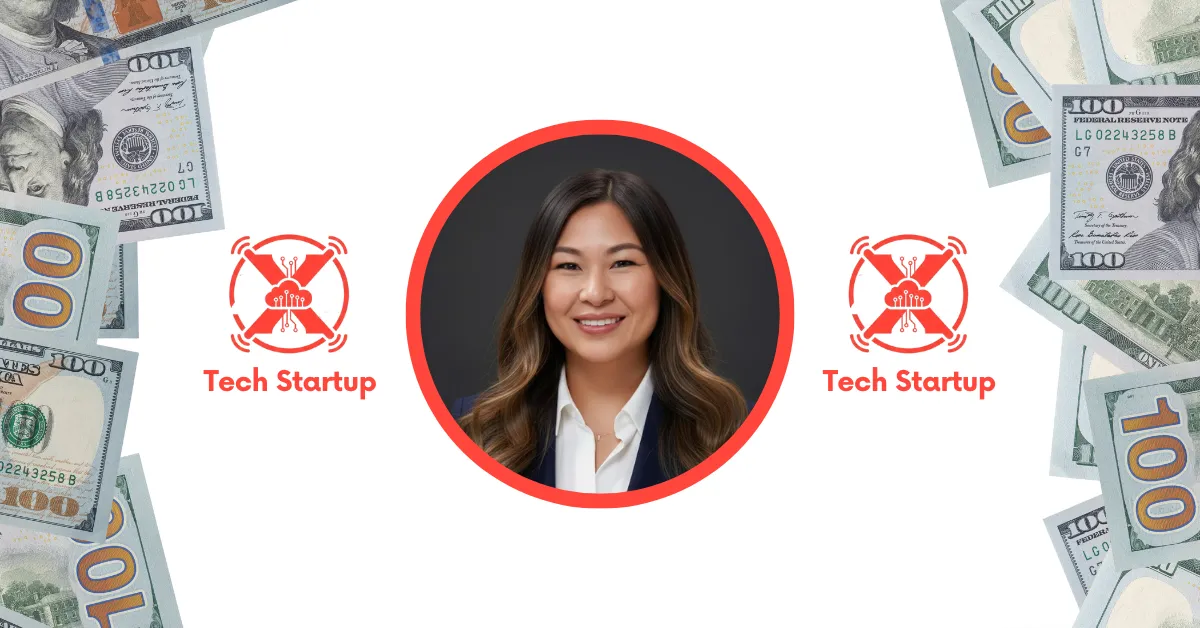
Most billionaires build their fortunes by running companies. Lucy Guo built hers by getting pushed out of one.
In 2018, just two years after co-founding Scale AI, Guo was fired by her younger co-founder, Alexandr Wang. She left with roughly 5% of the company. That stake seemed like a consolation prize at the time. By June 2025, when Meta paid $14.3 billion for 49% of Scale, valuing it at $29 billion, Guo’s 5% was suddenly worth $1.45 billion.
At 30 years old, she became the youngest self-made female billionaire in the world – unseating Taylor Swift – despite not working at the company that made her rich for seven years.
As of January 5, 2026, Guo’s net worth sits at approximately $1.45 billion. She spends it shopping at Shein, riding UberX, and building a creator platform called Passes from her $30 million Hollywood Hills mansion. It is the most improbable billionaire story in Silicon Valley.
The Kid Who Monetized Neopets
Lucy Guo was born October 14, 1994, in Fremont, California, to Chinese immigrant electrical engineers. By second grade, she was building simple websites – not as a hobby, but as the start of something bigger.
In middle school, she discovered Neopets, the virtual pet game that obsessed millions of kids in the early 2000s. While other students played casually, Guo coded bots that automated gameplay and accumulated digital resources. Then she sold the bots and in-game items for real money.
“I was making money on the playground,” she said later. The pattern was set early: spot inefficiency, build tools, monetize.
She attended Mission San Jose High School in Fremont, one of California’s most academically intense public schools. In 2012, she enrolled at Carnegie Mellon to study computer science and human-computer interaction.
The $100,000 Dropout Decision
Halfway through CMU, Guo applied for the Thiel Fellowship, Peter Thiel’s controversial program that pays talented people $100,000 to drop out of college and build startups instead. Thiel, the PayPal co-founder who became Facebook’s first outside investor, believed higher education was overpriced and unnecessary for exceptional entrepreneurs.
At 19, Guo won the fellowship. She took the money and left Carnegie Mellon. Critics called it short-sighted. Supporters pointed to success stories like Ethereum founder Vitalik Buterin.
For Guo, it opened Silicon Valley’s doors. She landed at Facebook, then at Snapchat in 2015-2016, where she became the company’s first female designer. At Snap, she worked on Snap Maps – the feature that lets users see friends’ locations and discover Stories from around the world. The experience taught her how fast-scaling consumer products work and gave her front-row access to product development at a rocket ship startup.
Meeting the 17-Year-Old Genius
After Snapchat, Guo joined Quora as a product designer. That is where she met Alexandr Wang, a 17-year-old gap year student working as a software engineer fresh out of Los Alamos High School.
Guo was 21. Wang was four years younger but had competed in Math Olympiads and programming competitions at the national level. Despite the age gap, they connected over AI and entrepreneurship. Guo saw potential in Wang that he did not fully recognize yet. They started brainstorming startup ideas.
The dynamic would later prove complicated. Guo recruited Wang. She was older, more experienced, and brought design and operational expertise. But Wang’s technical intensity was undeniable.
Y Combinator and the Birth of Scale AI
In summer 2016, they applied to Y Combinator with Ava, a chatbot for doctors. They got in. Sam Altman, years before he became OpenAI’s CEO, was running YC at the time.
The chatbot concept flopped. Late one night during the program, Wang searched for available domains and found scaleapi.com. They bought it immediately and launched a week later on Product Hunt. The pitch was simple: an API for human labor.
They quickly pivoted to the real opportunity. Self-driving car companies like Cruise and Tesla needed millions of images labeled with bounding boxes around cars, pedestrians, and street signs. Data labeling was tedious and expensive. Scale would build the infrastructure to do it at massive scale.
Guo became CEO. Wang was CTO. They found instant product-market fit. Well-funded autonomous vehicle startups paid premium prices for high-quality labeled data. Scale built a global workforce that eventually reached more than 100,000 contractors across the Philippines, Kenya, India, and thousands of U.S. towns.
The business model worked beautifully. Customers uploaded raw data, Scale’s contractors labeled it to specification, and Scale took a cut.
The 2018 Breakup
Within two years, something fractured between them. People familiar with the situation say they fundamentally disagreed on company direction and operations. Personality conflicts intensified as Scale grew. Wang wanted to be the sole face of the company. The board had to choose.
They chose Wang. In 2018, Guo was pushed out.
The official story presented it as amicable. Guo told Fortune she was not title-centric and that a division in culture and ambition alignment caused the split. Industry insiders describe it differently. “Wang pushed Guo out,” one person said bluntly.
But here is what mattered. Guo kept roughly 5% equity. This decision, whether negotiated aggressively or protected by standard founder equity agreements, defined her financial future. Many fired founders lose their stakes or face pressure to sell at depressed valuations. Guo held on.
“I don’t really think about it much, it’s a bit wild. Too bad it’s all on paper haha,” she told Fortune in 2025 about her billionaire status. The self-deprecating tone masks what actually happened. By retaining 5%, Guo positioned herself to benefit from Scale’s explosive growth despite contributing nothing for seven years. This outcome is extraordinarily rare in Silicon Valley founder disputes.
Building Backend Capital and Passes
Guo did not disappear after leaving Scale. In 2019, at 24, she founded Backend Capital, a VC firm focused on early-stage engineering startups. One of her first investments was Ramp, the corporate card company that reached a $5+ billion valuation by 2025. It was a smart bet.
Then in 2022, she launched Passes, a creator monetization platform combining elements of Patreon, OnlyFans, and Twitch. Creators could monetize through subscriptions, exclusive content, video chats, and live streaming.
The twist was AI avatars that mimic real creators. Fans could interact with digital versions trained on creator content and personality. While clearly labeled as AI, the avatars proved surprisingly popular. Creators could scale fan interactions without personally responding to everyone.
Early Passes creators included gymnast Olivia Dunne, NBA legend Shaquille O’Neal, and DJ Kygo. By 2025, the platform had over 1,000 creators and 500,000 users. Guo raised $66 million in funding, including a $40 million Series A led by Mary Meeker’s Bond Capital. She valued Passes at around $150 million by early 2025.
Unlike Scale, where she got fired, Passes gave her complete control.
The Meta Deal: Billionaire Status at 30
Through 2024 and early 2025, Scale’s valuation climbed. In May 2024, the company raised $1 billion at a $13.8 billion valuation. Guo’s 5% was suddenly worth around $700 million. Close to billionaire territory, but not quite there.
Then Meta shocked everyone. In June 2025, Mark Zuckerberg announced a $14.3 billion investment for 49% of Scale, valuing it at $29 billion. The deal included Wang leaving his CEO role to join Meta as Chief AI Officer leading the Superintelligence Labs.
The $29 billion valuation more than doubled Scale’s previous round. Guo’s 5% became worth $1.45 billion overnight.
At 30 years old, she officially became the world’s youngest self-made female billionaire – unseating Taylor Swift, who was 35 when she hit billionaire status.
Forbes confirmed it. The media went wild. Guo was one of only six self-made female billionaires under 40 globally, joining Rihanna, Daniela Amodei (Anthropic co-founder), Whitney Wolfe Herd (Bumble founder), and two others.
The Billionaire Who Shops at Shein
Despite $1.45 billion on paper, Guo maintains an aggressively frugal lifestyle, at least publicly. She told Fortune she still shops at Shein, the fast-fashion retailer known for $10 clothes. She rides UberX instead of Uber Black. She compares food prices. She admitted to booking flights at airports just to access Amex lounge free food, then canceling the reservations.
“I don’t like wasting money,” Guo explained. She admitted to past spending sprees when she felt insecure, buying a Patek Philippe watch and a Hermes Birkin bag. But she has moved past needing to project wealth.
“Who you see typically wasting money on designer clothes, a nice car, et cetera, they’re technically in the millionaire range,” she said. “All their friends are multimillionaires or billionaires, and they feel a little bit insecure, so they feel the need to be flashy.”
This frugal positioning aligns with quiet luxury trends among the ultra-wealthy. Warren Buffett lives in his original Omaha house. Mark Zuckerberg wears gray t-shirts. Guo’s thriftiness brands her as unpretentious.
But she does spend big in specific areas. In 2020, she bought a $6.7 million Miami condo. In 2024, a $4.2 million West Hollywood home. In 2025, a $30 million Hollywood Hills mansion, negotiated down from $43 million. The five-bedroom, 13,500-square-foot property represents serious wealth. She also owns a vintage rose-colored Ferrari and occasionally flies private to skip airport lines.
The contradiction is classic tech billionaire positioning: claim frugality on everyday purchases while dropping millions on real estate and transportation.
The 5:30 AM Grind
Guo maintains a relentless work schedule despite billionaire status. She wakes at 5:30 AM daily. Her routine includes two gym sessions, before and after work. She works 9 AM to 9 PM as standard.
“9 a.m. to 9 p.m., to me, that’s still work-life balance,” she told CNBC.
During Scale’s founding, she worked 90-hour weeks. “In general, when you’re first starting your company, it’s near impossible to do it without doing that. You’re going to need to work like 90-hour work weeks to get things off the ground,” she said.
This intensity reflects Silicon Valley’s valorization of extreme work ethic. Founders compete on who sleeps less and works more. Guo has internalized it completely. She believes most people waste time on unproductive activities after work, which is why they cannot achieve similar success.
Her thinking is influenced by the FIRE movement, Financial Independence, Retire Early. She has noted that consistent $100,000-plus investments in the S&P 500 compound to billions over a lifetime, suggesting billionaire status does not require entrepreneurial risk, only discipline.
Life at 30: EDM, Taylor Swift, and Los Angeles
Guo lives in Los Angeles, specifically her $30 million Hollywood Hills mansion. She is highly active on social media, including Twitter/X and Instagram, where she shares startup advice, tech memes, and lifestyle updates.
She is devoted to EDM, regularly attending Coachella, Ultra Music Festival, and other major events. In April 2024, she tweeted about meeting Taylor Swift and dancing with Rihanna, the kind of access that comes with billionaire status.
Despite her public presence, Guo shares little about romantic relationships or family life. No spouse or children are publicly known. At 30, she represents a generation prioritizing career and wealth over traditional milestones.
The contrast with Taylor Swift is striking. Swift built wealth through music, touring, and personal brand, requiring ongoing creative output. Guo built wealth through technical skills and equity retention after getting fired. Her wealth compounds passively through Scale’s valuation increases without her lifting a finger.
The Passes Controversies
Passes has not been smooth sailing. In March 2025, the platform faced legal action over content moderation policies. Critics raised concerns about creators monetizing adult content or inappropriate parasocial relationships. The AI avatar feature sparked particular controversy, blurring lines between real creator interactions and AI simulations.
Guo emphasized transparency and technology to prevent abuse, but acknowledged the complexity of content moderation, especially with AI-generated content. The platform implements age verification, content guidelines, and AI labeling. Enforcement at scale remains difficult.
In February 2025, Passes faced separate lawsuits from former employees and contractors alleging wage theft and poor working conditions. The complaints echoed criticisms of Scale AI’s Remotasks platform, where contractors reported low pay, delayed payments, and zero recourse for disputes.
Guo disputed the allegations, pointing to competitive contractor rates and platform flexibility. Still, the pattern raised questions about whether she was replicating the exploitative labor practices that made Scale AI controversial.
Breaking Down the $1.45 Billion
As of January 5, 2026, Guo’s net worth is approximately $1.45 billion.
Scale AI stake: Guo owns roughly 5% of Scale AI, valued at $29 billion after the Meta deal. Her stake is worth approximately $1.45 billion. This represents the overwhelming majority of her wealth. Unlike typical tech founders, Guo built her fortune from a company she has not worked at in seven years, making her wealth almost entirely passive.
Passes ownership: Guo owns a majority stake in Passes, valued at approximately $150 million as of early 2025. After raising $66 million, her ownership likely sits around 60 to 70 percent. Her Passes stake is estimated at $90 to $105 million.
Backend Capital: As founder, Guo owns a significant portion of the fund and benefits from carried interest. With Ramp and other portfolio companies appreciating, Backend’s assets under management likely exceed $50 million. Guo’s estimated net value from Backend is $15 to $25 million.
Real estate: Three properties, a $6.7 million Miami condo, a $4.2 million West Hollywood home, and a $30 million Hollywood Hills mansion, total approximately $41 million.
Other assets: Ferrari, cash from stock sales and salary, cryptocurrency holdings, and angel investments are estimated at $10 to $20 million combined.
The total adds up to roughly $1.6 billion or more, but most wealth rankings cite $1.25 to $1.45 billion, focusing primarily on the Scale AI stake and discounting other holdings as illiquid or speculative.
What Happens in 2026
Looking toward late 2026, Guo’s net worth could range from $1 billion to $2 billion depending on Scale’s performance and Passes’ trajectory.
Best case: If Scale executes successfully post-Meta deal and valuation appreciation reaches $35 to $40 billion, Guo’s 5% stake rises to $1.75 to $2 billion. If Passes raises a Series B at a $300 to $400 million valuation, her stake adds $200 to $280 million. Net worth exceeds $2 billion.
Base case: Scale maintains its $29 billion valuation through steady execution. Revenue reaches $2 billion or more by late 2026. Customer concerns about Meta ownership remain manageable. Passes continues growing but does not raise at a significantly higher valuation. Net worth remains around $1.4 to $1.6 billion.
Worst case: If Scale faces customer exodus or integration issues, valuation could decline to $22 to $25 billion. Guo’s stake drops to $1.1 to $1.25 billion. If Passes fails to achieve product-market fit or faces ongoing legal challenges, its value stagnates. Net worth falls toward $1 to $1.2 billion.
The most likely outcome falls in the $1.4 to $1.6 billion range. Most of Guo’s wealth remains on paper until Scale goes public or is acquired outright.
The Takeaway
Lucy Guo’s $1.45 billion net worth represents one of the most improbable success stories in tech. A Carnegie Mellon dropout who coded Neopets bots as a kid, designed products at Snapchat, co-founded Scale AI at 21, got fired at 23, kept 5%, and became the world’s youngest self-made female billionaire at 30, all while claiming to shop at Shein.
Her story offers clear lessons. Equity retention matters more than titles. Guo lost the CEO role but kept her stake. That 5%, approximately $1.45 billion, exceeds what most successful entrepreneurs earn in entire careers.
Timing also creates outliers. Guo co-founded Scale just as self-driving cars required massive data labeling. Then the AI boom accelerated demand. Without that timing, Scale might have remained a modest services business.
Finally, hustle culture persists despite wealth. Guo works 12-hour days, wakes at 5:30 AM, and maintains intense productivity despite billionaire status. The mindset that built her fortune did not switch off with financial success.
Looking forward, Guo’s challenge is building Passes into a platform worth hundreds of millions independent of Scale. Success would diversify her wealth and cement her reputation as a repeat founder. Failure would leave her primarily known for the 5% stake she wisely retained.
For now, Lucy Guo embodies modern tech’s contradictions: a paper billionaire shopping at Shein, an EDM festival regular advising startups, and the youngest female billionaire whose fortune came from getting fired.