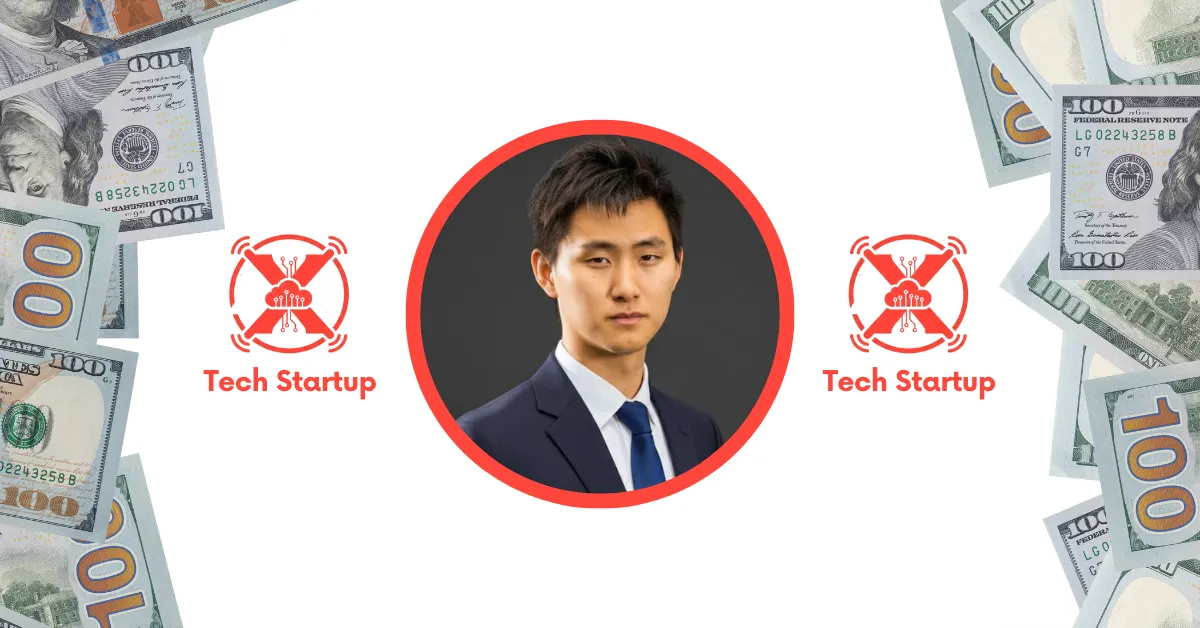
Alexandr Wang represents the most improbable trajectory in Silicon Valley’s AI boom. A Los Alamos-born math prodigy who dropped out of MIT after one year to build Scale AI—the data labeling company that became the invisible infrastructure powering OpenAI, Meta, and the U.S. military. Born in January 1997 to Chinese immigrant physicists, Wang is 28 years old. With an estimated net worth of $5.6 billion as of December 2025, Wang now serves as Meta’s Chief AI Officer leading the Superintelligence Labs—a role he secured through a shocking $14.3 billion deal that valued Scale AI at $29 billion and made him Mark Zuckerberg’s top AI lieutenant. His journey from catching roommates stealing food with AI cameras to training ChatGPT to advising President Trump on AI policy captures technology’s breakneck evolution. As the youngest self-made billionaire in history (achieving that status at age 24), Wang’s fortune stems from recognizing what everyone else missed: AI models don’t fail from bad algorithms but from bad data. Now, as Meta bets $14.3 billion that Wang’s Rolodex and data expertise can deliver artificial general intelligence, his wealth and influence position him as Silicon Valley’s most connected power broker under 30.
From Atomic Bomb Town to Math Olympiads: Los Alamos Origins
Alexandr Wang was born in January 1997 in Los Alamos, New Mexico—the town where America developed the atomic bomb during World War II’s Manhattan Project. His parents, Chinese immigrants who fled to America for education opportunities, worked as physicists at Los Alamos National Laboratory. They specialized in weapons physics and classified military projects. Growing up surrounded by scientists working on national security created an intellectually intense environment.
Dinner table conversations revolved around black holes, wormholes, alien life, and supernovae. Wang absorbed scientific rigor from an early age. His parents taught him algebra in second grade. By fourth grade, he entered his first math competition in New Mexico, scoring best among all fourth graders statewide. The competitive spark ignited.
Wang’s exceptional aptitude for mathematics and computer science became evident throughout middle and high school. He attended Los Alamos High School, a magnet school with rigorous STEM curriculum. His achievements included Math Olympiad Program qualification (2013), US Physics Team finalist (2014), and USACO (USA Computing Olympiad) finalist in both 2012 and 2013.
These weren’t just participation trophies. Math Olympiad and USACO represent the absolute elite of American math and programming talent. Thousands compete. Dozens advance to finals. Wang competed against future founders, professors, and hedge fund quants. The pattern recognition, algorithmic thinking, and competitive intensity shaped his entrepreneurial approach.
The Quora Gap Year: Meeting Lucy Guo at 17
Most Los Alamos High graduates head directly to college. Wang took a different path. After graduating in 2014, he took a gap year and moved to Silicon Valley. At just 17 years old, he landed a job as a software engineer at Quora—the question-and-answer website founded by former Facebook executives.
Working full-time at Quora transformed Wang’s trajectory. “After my first few months of working 12-hour days at Quora, I remember being really surprised at how much I’d improved as an engineer,” he wrote in a 2016 blog. “It felt like I went from a code monkey to a legitimate system architect in just a few months, even though I had been coding for years beforehand.”
At Quora, Wang met Lucy Guo, a product designer and Carnegie Mellon dropout who had been Snapchat’s first female designer through the Peter Thiel Fellowship. Their partnership would define both their fortunes. Guo recognized Wang’s raw talent. Wang admired Guo’s design thinking and entrepreneurial drive. They began discussing startup ideas.
Wang also briefly worked as an algorithm developer at Hudson River Trading, a high-frequency trading firm, during this period. The quantitative trading experience exposed him to how data quality affects algorithmic performance—a lesson that would prove critical.
MIT Dropout and the Stolen Food Epiphany
In fall 2015, Wang enrolled at MIT to study mathematics and computer science. He was 18 years old. MIT represented the pinnacle of technical education. But Wang struggled to focus on coursework while startup ideas consumed his thoughts.
The lightbulb moment came from a mundane problem. Wang suspected a roommate was stealing his food from the shared refrigerator. He decided to catch the thief by installing a camera and developing AI algorithms to analyze facial expressions and identify the culprit from video footage.
The experiment failed. “I realized like oh shit if I really want to make this I need like a million times more data than I have now,” Wang recalled. The overwhelming volume of unlabeled video footage taught him a fundamental lesson: AI progress wasn’t limited by algorithms but by data. Even simple tasks required massive datasets of labeled examples. Nobody was solving this bottleneck systematically.
During his freshman year spring 2016, Wang weighed summer internship offers. A conversation with Eric Wu, CEO of Opendoor, convinced him to pursue entrepreneurship. “I knew I would regret it if I never took the risk to be an entrepreneur at the perfect time,” Wang wrote.
Y Combinator and the Scale AI Founding Story
In summer 2016, Wang and Lucy Guo applied to Y Combinator, Silicon Valley’s premier startup accelerator. Their initial idea focused on building chatbot technology for a doctors’ concierge service called Ava. The concept wasn’t working.
During the intensive three-month YC program, they pivoted. “One night I was just like trolling around for domains scaleapi.com was available and then we just bought it,” Wang recalled. “We launched it I think a week later on Product Hunt.” The initial concept was simple: “an API for human labor”—allowing companies to call human workers through an API interface.
Wang and Guo quickly realized the real opportunity. Self-driving car companies like Cruise and Tesla needed massive amounts of labeled data. Every autonomous vehicle required millions of images annotated with bounding boxes around pedestrians, cars, traffic signs, and lane markers. Data labeling was tedious, time-consuming, and expensive. Scale AI would build the infrastructure to do it at scale.
“They were originally working on completely different ideas and spent most of the first summer just figuring out what to build,” recalls YC partner who mentored them in 2016. Once they pivoted to data labeling, Scale AI found perfect timing. Well-funded self-driving startups needed exactly what Scale offered.
Wang made the fateful decision. He dropped out of MIT after freshman year. “It was just going to be a thing I did for the summer,” he told his physicist parents. He never went back. At 19 years old, Wang became CEO. Lucy Guo served as original CEO but they restructured after Series A, with Wang taking the CEO role and Guo focusing on product. Guo told Fortune Wang believed “he’d be better as the face of an API company” and she agreed, not being “title-centric.”
The Co-Founder Breakup and Lucy Guo’s Exit
Within two years, tensions emerged. Guo had recruited Wang. She was the original CEO. But as Scale grew, the co-founders clashed over strategy and execution. According to sources familiar with the matter, they couldn’t agree on how each was handling responsibilities. The board sided with Wang.
In 2018, Guo left Scale AI. The official narrative presented it as amicable. Guo maintained a 5% stake. She told Fortune she wasn’t “title-centric” and agreed to step aside. But industry insiders suggest the split was contentious. “Wang pushed Guo out” is how one person described it.
Guo moved on quickly. She founded Backend Ventures, a tech-focused VC firm, in 2019. In 2022, she launched Passes, a content creator monetization platform. The Meta deal in June 2025 valued her 5% Scale stake at $750 million. At 30 years old, Guo became the world’s youngest female self-made billionaire—eclipsing Taylor Swift.
The breakup echoes countless Silicon Valley co-founder divorces. Technical founders often prevail over product/design co-founders as companies scale. Wang’s math/algorithms focus aligned with Scale’s increasingly technical direction. Guo’s design sensibility proved less critical. The pattern repeats across tech history.
Building Scale: From Self-Driving Cars to ChatGPT
From 2016-2021, Scale AI grew systematically. Early clients included Cruise (GM’s self-driving subsidiary) and Tesla’s Autopilot team. The autonomous vehicle market provided steady revenue. Scale built a global workforce of data labelers—eventually reaching 100,000+ contractors across 9,000 U.S. towns plus international workers in Philippines, Kenya, and India.
The business model was elegant. Companies uploaded raw data—images, video, text, audio. Scale’s contractors labeled it according to specifications. Self-driving cars needed bounding boxes. Natural language models needed sentiment labels and entity recognition. Computer vision models needed segmentation masks. Scale provided the infrastructure, quality control, and contractor management.
Revenue grew from millions to tens of millions to hundreds of millions. In 2019, Peter Thiel’s Founders Fund invested $100 million at a $1 billion valuation. Scale AI achieved unicorn status when Wang was just 22 years old.
Then ChatGPT changed everything. When OpenAI launched ChatGPT in November 2022, demand for AI training data exploded. Every company suddenly needed language models. Language models required massive amounts of human-labeled data for fine-tuning. Scale AI was perfectly positioned.
Scale’s business pivoted from primarily computer vision (self-driving) to language model training. The company hired PhDs, historians, and subject matter experts to generate high-quality text data. One annotation could cost $100. Contractors wrote haikus, summarized news articles, and crafted stories in dozens of languages. This human feedback made chatbots smarter.
The Youngest Self-Made Billionaire at 24
In 2021, Scale AI raised $325 million in Series E funding led by Tiger Global, Coatue, and Wellington. The round valued Scale at $7.3 billion. Wang owned approximately 15% of the company. His stake: $1.095 billion.
At age 24, Alexandr Wang became the world’s youngest self-made billionaire. Forbes confirmed the milestone. Media attention exploded. Wang appeared on “30 Under 30” lists in 2018 and 2021. Time magazine named him to Time 100 Next and Time100 AI. Comparisons to Elon Musk emerged.
Wang maintained relative privacy despite billionaire status. He didn’t flaunt wealth. No superyachts. No flashy cars. Friends described him as hardworking, intensely focused, and obsessed with networking. His LinkedIn showed thousands of connections. He attended every important AI conference, dinner, and party.
The Sam Altman Roommate Relationship
During the COVID-19 pandemic’s height in 2020-2021, Wang lived as roommates with Sam Altman, CEO of OpenAI. The arrangement raised eyebrows. Both men were already wealthy. Altman was 35. Wang was 23-24. Why live together?
The connection ran deep. Altman had run Y Combinator when Wang and Guo went through the 2016 summer batch. Altman mentored Wang during Scale’s early days. They became genuine friends. Living together during the pandemic—when many Silicon Valley figures fled to Montana, Miami, or Austin—suggested close personal bonds.
Altman even joked about Wang’s networking intensity. “Officially certified, you definitely attend the most parties,” Altman quipped publicly. Wang’s networking wasn’t just social—it was strategic. Scale AI served OpenAI as a critical data provider. Understanding OpenAI’s roadmap gave Wang competitive intelligence. The roommate arrangement provided unprecedented access during ChatGPT’s development period.
Speculation about their relationship dynamics circulated on forums like Blind. Some suggested romantic involvement given Altman’s openly gay orientation. Others viewed it as pure Silicon Valley networking. Regardless, the relationship positioned Wang perfectly as AI exploded. When ChatGPT launched, Wang already understood OpenAI’s data needs intimately.
The Defense Contracts and Washington Whisperer
While consumer AI companies grabbed headlines, Wang quietly built government relationships. Scale AI won defense contracts with the U.S. Army, Air Force, and Pentagon’s Chief Digital and AI Office. Contract values exceeded $400 million over four years.
Military applications included satellite imagery analysis, weapon systems optimization, and AI safety testing for sensitive applications. Wang testified before Congress multiple times. He briefed members on AI capabilities and risks. His influence in Washington grew as policymakers recognized AI’s strategic importance.
Wang took increasingly hawkish positions on China. In a 2024 ChinaTalk interview, he described China as “the greatest geopolitical competitor” to America. He warned about Chinese AI capabilities in both software and hardware. Wang revealed his parents “hate the CCP”—one of the few personal details publicly available.
In January 2025, Wang attended President Trump’s second inauguration alongside other tech CEOs. He published a letter addressed to Trump: “Dear President Trump, America must win the AI war.” The Washington Post full-page ad outlined a five-point plan for federal AI investment. Trump’s administration, Wang believed, would “move fast and take a lot of action.”
In February 2025, Wang met with world leaders including UK Prime Minister Keir Starmer, Indian Prime Minister Narendra Modi, French President Emmanuel Macron, and U.S. House Speaker Mike Johnson. He discussed AI cooperation and competition. Wang spoke at the World Economic Forum in Davos, highlighting the U.S.-China AI race.
At 28 years old, Wang had become Washington’s “AI whisperer”—translating technical capabilities for policymakers while positioning Scale AI for government contracts.
The Meta Deal: $14.3 Billion and Chief AI Officer Role
In May 2024, Scale AI raised $1 billion at a $13.8 billion valuation. Investors included Nvidia, Meta, Amazon, and Accel. The round validated Scale’s position as AI infrastructure. Wang’s 14% stake was worth nearly $2 billion.
Then Mark Zuckerberg made his move. Through early 2025, Wang spent increasing time with Zuckerberg at his homes in Lake Tahoe and Palo Alto. They discussed AI’s future. Zuckerberg wanted to build “superintelligence”—AI systems smarter than humans. He was assembling a 50-person team of elite researchers. He wanted Wang to lead it.
Negotiations were complex. Scale’s board included only four members: Wang, Dan Levine of Accel, former Index Ventures partner Mike Volpi, and one other seat. Wang held super-voting shares but didn’t control a majority. The board debated intensely: how much control to cede to Meta? What would happen to Scale’s other customers?
The risks were obvious. Scale served Meta’s direct competitors—OpenAI, Google, Microsoft. Google alone planned to pay $200 million in 2025 for Scale’s services. Would those customers trust Scale after Meta acquired 49%?
Top Silicon Valley law firms battled. Latham & Watkins represented Meta. Wilson Sonsini advised Scale. Centerview Partners provided investment banking. Negotiations nearly collapsed in early June 2025.
The final deal shocked the industry. On June 12, 2025, Meta announced it would invest $14.3 billion to acquire 49% of Scale AI. The deal valued Scale at $29 billion—more than doubling the $13.8 billion valuation just one year earlier. Wang’s 14% stake became worth approximately $4.1 billion. His cash and equity from the deal totaled over $5 billion according to Bloomberg Billionaires Index.
The kicker: Wang would leave his CEO role to join Meta as Chief AI Officer, leading the newly formed Superintelligence Labs and reporting directly to Zuckerberg. Wang would remain on Scale’s board as a director but transition day-to-day operations to new CEO Jason Droege.
“Opportunities of this magnitude often come at a cost,” Wang wrote in his memo to Scale employees. “In this instance, that cost is my departure.” For Wang, the decision was agonizing. “It was a total shock,” said a former Scale AI manager. “I never thought about the idea of Alex leaving Scale, especially when we’d just announced the tender offer at a $25 billion valuation.”
But the upside was immense. Wang would lead Meta’s most ambitious project—building AGI. He’d gain access to Meta’s compute infrastructure, research teams, and global distribution. His wealth surged past $5 billion. At 28, he commanded Zuckerberg’s full confidence.
The Fallout: Google Exits, Customers Worry
The Meta deal created immediate problems. Google, Scale’s largest customer, planned to pay $200 million in 2025. After learning Meta acquired 49%, Alphabet moved to terminate the relationship. Google started contacting Scale competitors to transfer data annotation business.
OpenAI, Microsoft, and other clients expressed concerns about data security and business intelligence leakage. Would Meta gain competitive insights from Scale’s customer data? Tech analyst Ben Thompson called it “a very expensive acquihire of Alexandr Wang.”
Lucy Guo received $750 million from her 5% stake. The deal made her the world’s youngest female billionaire at 30. But the Meta tie-up complicated her relationship with Wang further. Guo declined to comment on their current relationship status.
Scale AI’s revenue continued growing despite concerns. The company generated $870 million in 2024 revenue. Annualized run rate approached $1.5 billion by late 2025. The Outlier platform paid contractors over $500 million in the last year alone. With 1,000+ employees and 100,000+ contractors, Scale remained AI infrastructure’s critical player.
The MEI Controversy and Anti-DEI Stance
In June 2024, Wang announced Scale AI would adopt a “merit, excellence, and intelligence” (MEI) hiring policy, explicitly opposing diversity, equity, and inclusion (DEI) practices. “We believe people should be judged by the content of their character—and, as colleagues, be additionally judged by their talent, skills, and work ethic,” Wang stated.
The declaration ignited controversy. Critics accused Wang of providing cover for discrimination. Supporters applauded rejecting what they viewed as DEI’s excesses. The stance aligned Wang with the anti-woke tech faction including Peter Thiel, Marc Andreessen, and Elon Musk.
Wang’s positioning reflected calculated brand-building. In tech’s increasingly polarized landscape, signaling merit-focused values attracted talent tired of DEI requirements. It also aligned with his Washington influence strategy—Trump administration officials favored similar messaging.
Labor Practices and Remotasks Criticism
As Scale grew, labor practices faced scrutiny. A Washington Post investigation highlighted problems with Scale’s Remotasks platform—especially in the Philippines. Thousands of workers received low pay, experienced payment delays, and had zero recourse for disputes.
Labor rights groups criticized Scale AI and other American AI companies for exploiting overseas workers. Indian contractors made similar allegations. The model resembled gig economy platforms: classify workers as contractors, pay per task, provide no benefits, and maintain minimal accountability.
Scale responded that contractors had flexibility and could work globally. Average earnings exceeded local minimums in many markets. But the optics troubled some observers. Wang’s $5+ billion fortune was built partly on $1-2 per hour labor in developing countries. The AI revolution’s wealth concentration was stark.
Alexandr Wang Net Worth December 2025: $5.6 Billion
Wang’s net worth fluctuates with Scale AI’s private market valuation and Meta stock performance. As of December 2025, credible estimates place his net worth at $5.6 billion.
Net Worth Components:
Scale AI Stake: Wang owns approximately 14% of Scale AI, valued at $29 billion after the Meta deal. His stake: $4.06 billion. This represents his primary wealth source.
Meta Deal Proceeds: The $14.3 billion Meta investment included cash distributions to shareholders. Wang’s portion likely exceeded $500 million in liquid proceeds based on his ownership percentage and the deal structure.
Meta Compensation: As Chief AI Officer reporting to Zuckerberg, Wang receives substantial compensation. Meta CEO-level roles include multi-million dollar salaries, bonuses, and RSU grants. Annual compensation likely exceeds $20-30 million.
Real Estate and Investments: Wang maintains a relatively low-profile lifestyle. No public records show major real estate purchases or conspicuous consumption. Estimated holdings: $50-100 million in diversified investments.
Forbes and Bloomberg Estimates: Forbes listed Wang’s net worth at $3.6 billion as of April 2025, before the Meta deal. Bloomberg Billionaires Index reported his wealth exceeded $5 billion immediately after the June announcement. Various sources cite figures ranging from $3.2 billion to $5.6 billion as of December 2025, with the higher figure more plausible given Scale’s $29 billion post-deal valuation.
The discrepancy reflects private company valuation challenges. Scale AI doesn’t trade publicly. The $29 billion valuation stems from Meta’s purchase price, but whether that reflects broader market consensus remains unclear. Marking Wang’s 14% stake to that price yields $4+ billion, but actual realizable value could differ.
Personal Life and Silicon Valley’s Most Connected Networker
Wang maintains unusual privacy for a tech billionaire. No spouse or children are publicly known. His LinkedIn bio simply identifies him as CEO of Scale AI (now former). His Twitter presence focuses on AI policy and industry commentary rather than personal content.
What’s known about Wang’s personality comes from colleagues and acquaintances. He’s described as intensely focused, hardworking, and networking-obsessed. His ability to cultivate relationships across Silicon Valley, Washington, and global tech scenes distinguishes him. “There is no one in the AI circle he doesn’t know,” said a close friend who requested anonymity.
Wang’s networking extends beyond professional utility. He genuinely enjoys meeting people, understanding their work, and connecting dots across the industry. This social intelligence, combined with technical depth, makes him uniquely valuable. It’s why Zuckerberg paid $14.3 billion for access to Wang’s knowledge of what everyone in AI is doing.
Despite wealth, Wang doesn’t display typical billionaire trappings. No mansion purchases. No exotic car collections. No luxury lifestyle Instagram posts. This restraint mirrors other young tech billionaires like Brian Chesky (Airbnb) and Patrick Collison (Stripe) who maintain relatively modest public profiles.
Meta Superintelligence Labs: The 2026 Challenge
As Chief AI Officer, Wang leads Meta’s most ambitious project. The Superintelligence Labs team includes 50 handpicked researchers and engineers. Key hires include Jack Rae, formerly Principal Research Scientist at Google DeepMind, and Johan Schalkwyk, ML Leader at Sesame AI.
The mandate: achieve artificial general intelligence (AGI) before OpenAI, Google, or Anthropic. Zuckerberg believes Meta can win the AGI race through combination of compute resources, research talent, and global distribution. Once achieved, AGI would integrate across Meta’s products—Facebook, Instagram, WhatsApp, Oculus, and Ray-Ban smart glasses.
Wang brings unique advantages. His Scale AI experience taught him how data quality affects model performance. His OpenAI relationship provides competitive intelligence. His Washington connections help navigate regulatory challenges. His youth—at 28, he’s younger than most researchers he manages—signals fresh thinking.
But challenges loom. Meta’s Llama 4 AI models received lukewarm reception in mid-2025. CNBC reported developers found them less impressive than competitors. Meta lags OpenAI in consumer AI mindshare. Google’s DeepMind boasts longer research pedigree. Anthropic’s Claude models compete effectively.
The organizational dynamics are delicate. Yann LeCun, Meta’s Chief AI Scientist and Turing Award winner, theoretically reports to Wang. LeCun is 64 years old with legendary research credentials. Having a 28-year-old boss rankles. Some observers expect tension. LeCun’s social media suggests discomfort with the reporting structure.
Wang must navigate technical challenges, organizational politics, regulatory scrutiny, and existential AI safety questions—all while delivering AGI before competitors. His success or failure will define both his legacy and net worth trajectory.
2026 Outlook: The $8-12 Billion Range
Looking toward late 2026, Wang’s net worth could range from $6 billion to $12 billion depending on Scale AI’s performance, Meta’s stock, and his Meta compensation.
Bull Case ($10-12 billion): If Meta’s Superintelligence Labs achieve breakthrough AGI progress, Meta’s stock could surge 30-50%. Wang’s Meta RSU grants would multiply in value. If Scale AI executes despite customer concerns and achieves $2+ billion revenue, the $29 billion valuation proves conservative. Later funding rounds or acquisition discussions could value Scale at $40-50 billion. Wang’s 14% stake reaches $5.6-7 billion. Combined with Meta compensation and liquid proceeds, his net worth exceeds $10 billion.
Base Case ($6-8 billion): Scale AI maintains $29 billion valuation through steady execution. Revenue reaches $1.8-2 billion by late 2026. Customer diversification offsets Google exit. Meta’s stock performs in line with market. Wang’s compensation adds $50-100 million annually. Net worth grows modestly to $6-8 billion through stock appreciation and compensation.
Bear Case ($4-6 billion): If Scale AI’s customer exodus accelerates beyond Google and Meta’s integration creates conflicts, Scale’s valuation could decline to $20-25 billion in secondary markets. Wang’s stake drops to $2.8-3.5 billion. If Meta’s Superintelligence Labs fail to deliver breakthroughs and Llama models continue underperforming, Meta’s stock stagnates or declines. Wang’s RSU grants lose value. Net worth falls toward $4-6 billion range.
The most likely scenario falls in the $6-8 billion range. Wang’s diversification through the Meta deal—converting concentrated Scale equity into a mix of retained ownership, cash proceeds, and Meta compensation—reduces downside risk while maintaining upside exposure.
Conclusion: The Most Connected Man in AI
Alexandr Wang’s estimated $5.6 billion net worth (December 2025) represents one of history’s most meteoric wealth accumulations. From Los Alamos math competitions to MIT dropout to youngest self-made billionaire to Meta’s Chief AI Officer—all accomplished by age 28.
His fortune stems from a simple insight: AI models need better data more than better algorithms. While others chased flashy model architectures, Wang built unglamorous data infrastructure. That infrastructure became indispensable as ChatGPT sparked the AI boom.
But Wang’s true differentiator isn’t technical vision—it’s social intelligence. His networking intensity borders on legendary. Living with Sam Altman during ChatGPT’s development. Befriending Mark Zuckerberg. Advising President Trump. Meeting Modi, Macron, and Starmer. Wang doesn’t just build AI companies; he positions himself at every critical node in the AI ecosystem.
Looking forward, Wang’s challenge is delivering AGI at Meta while managing Scale AI’s board responsibilities. Success could push his wealth past $10 billion and establish him as this generation’s defining AI architect. Failure could reduce him to a cautionary tale about young billionaires overpromising.
For now, Alexandr Wang embodies Silicon Valley’s AI moment: brilliant, ambitious, extraordinarily well-connected, and carrying the weight of impossible expectations. The physicist’s son from Los Alamos stands at the center of technology’s most important battle. Whether he helps Meta achieve superintelligence or becomes another overhyped dropout remains 2026’s biggest question.