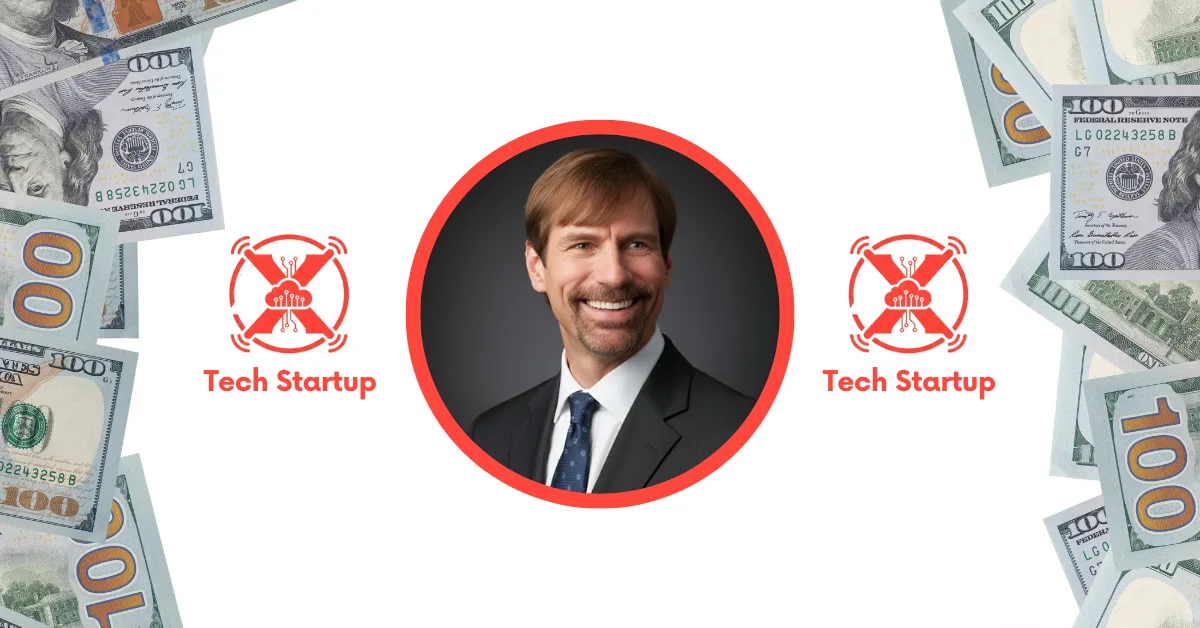
Henry Thompson Nicholas III stands as one of the semiconductor industry’s most influential yet controversial figures. As co-founder of Broadcom Inc. alongside Henry Samueli, he helped create a technology powerhouse that fundamentally transformed broadband communications and wireless connectivity. Yet his legacy extends far beyond silicon chips—Nicholas has emerged as America’s foremost advocate for victims’ rights, channeling his fortune into constitutional reforms across the nation. As of 2025, Forbes ranks Nicholas as the 99th wealthiest person in the world with a net worth of $21.3 billion, reflecting both Broadcom’s explosive growth in the AI era and his strategic exit from daily operations two decades ago. This comprehensive profile examines Henry Nicholas’ net worth trajectory toward 2026, his groundbreaking contributions to semiconductor technology, and his transformation from tech billionaire to social activist reshaping America’s criminal justice system.
Early Life & Education: Overcoming Adversity Through Innovation
Born on October 8, 1959, in Cincinnati, Ohio, Henry Thompson Nicholas III came from a family that would soon be torn apart by divorce. His father, Henry T. Nicholas Jr., worked as an attorney for the IRS, while his mother, Marcella, served as a teacher and theater instructor in Princeton City School District. When Nicholas was just four years old, his parents divorced, prompting him to relocate with his mother and sister to Los Angeles, California.
The family eventually settled in Malibu, where Nicholas attended elementary schools before progressing to Santa Monica High School. Despite struggling with dyslexia—a learning disability that affects reading and writing—Nicholas demonstrated exceptional aptitude for mathematics and science. This intellectual resilience would define his approach to both business and philanthropy for decades to come.
After attending the United States Air Force Academy in Colorado Springs, Colorado, Nicholas graduated from UCLA School of Engineering in 1982 with a Bachelor of Science degree in electrical engineering. Standing 6 feet 6 inches tall, his height prevented him from becoming a fighter pilot, leading him to drop out of the Academy after three years and return to UCLA. He continued his education at UCLA, earning a Master of Science degree in 1985 and ultimately completing his Ph.D. in electrical engineering in 1998—remarkably, seven years after co-founding Broadcom.
The tragedy that would shape Nicholas’ life mission occurred in 1983 when his sister, Marsalee “Marsy” Nicholas, a 21-year-old senior at UC Santa Barbara, was stalked and killed by her ex-boyfriend. Just one week after the funeral, Marsy’s mother encountered the killer at a grocery store, unaware he had been released on bail. This devastating experience—the family receiving no notification from the judicial system—would later fuel Nicholas’ multimillion-dollar crusade to reform victims’ rights laws nationwide.
Career & Entrepreneurial Journey: From $5,000 to $37 Billion
After graduating from UCLA in 1982, Nicholas began his career at TRW in Redondo Beach, California, a major aerospace and defense contractor. It was at TRW where he first met Henry Samueli, who was teaching as a UCLA engineering professor. Their professional relationship would prove transformative. Nicholas later moved to PairGain Technologies in Cerritos, where he served as director of microelectronics, gaining crucial experience in semiconductor design and telecommunications.
The Broadcom Foundation
The pivotal moment came in 1991. Nicholas and Samueli founded Broadcom in the spare bedroom of Nicholas’ Redondo Beach condominium. Each partner invested just $5,000 of their own money, launching what would become one of history’s fastest-growing semiconductor companies. The timing proved prescient—they entered the market just as demand for broadband communications began exploding with the internet’s commercialization.
Broadcom’s Meteoric Rise: Key Milestones
- 1991: Founded in Nicholas’ spare bedroom with $5,000 each from the two Henrys
- 1992: Rented first office in Westwood near UCLA campus
- 1995: Relocated to Irvine, establishing Orange County as their permanent base
- 1998: Blockbuster IPO on NASDAQ (ticker: BRCM) made both founders instant billionaires
- 2000: Stock peaked at $182.42 per share; company market cap exceeded $60 billion
- 2003: Nicholas retired as CEO at age 43 to focus on personal and philanthropic matters
- 2011: Reached $7.4 billion in annual revenue
- 2016: Acquired by Avago Technologies for $37 billion; combined entity retained Broadcom name
Broadcom reached $1 billion in revenue faster than any U.S. semiconductor company in history. The company’s innovations enabled the broadband revolution, with their chips powering cable modems, set-top boxes, wireless routers, and eventually smartphone components. Nicholas served as co-chairman, president, and CEO, driving aggressive expansion into emerging markets.
On IPO day in 1998, Broadcom’s stock debuted at $4 per share and more than doubled during the first trading session. By the end of that day, Nicholas and Samueli were each worth more than $600 million. Six months later, both were billionaires. By August 2000, at the height of the dot-com boom, Broadcom’s market cap topped $60 billion, and the two Henrys were each worth $10 billion.
Early Retirement and Legal Controversies
Nicholas retired from Broadcom in 2003, ostensibly to work on his marriage. His departure came amid growing personal issues, though he remained a significant shareholder and strategic advisor. The years following his retirement brought both philanthropic triumphs and serious legal challenges.
Between 2006 and 2010, Nicholas faced federal indictments related to stock options backdating—a widespread practice in Silicon Valley during the late 1990s where companies retroactively altered the dates on stock options to maximize gains. He also faced drug-related charges. However, prosecutors eventually dismissed all charges in 2010.
More recently, in August 2018, Nicholas was arrested in Las Vegas on suspicion of drug trafficking after various drugs were found in his hotel suite. In August 2019, he entered an Alford plea to two felony drug-possession charges. Under the plea agreement, he agreed to donate $1 million to a drug treatment program, perform 250 hours of community service, and attend drug counseling. In exchange, prosecutors dismissed five more serious drug trafficking charges and did not seek prison time.
Despite these controversies, Nicholas has maintained his business interests and philanthropic commitments, demonstrating resilience and commitment to personal redemption through charitable work.
Henry Nicholas Net Worth 2026: Current Valuation and Growth Analysis
Henry Nicholas’ wealth has experienced remarkable appreciation in recent years, driven primarily by Broadcom’s central role in the artificial intelligence revolution and continued dominance in networking semiconductors. Multiple credible sources provide varying estimates based on different methodologies and timing.
Net Worth Estimates by Source (December 2025)
| Source | Estimated Net Worth | Global Rank | Methodology | Last Updated |
|---|---|---|---|---|
| Forbes | $21.3 billion | 99th worldwide | Full portfolio valuation | 2025 |
| GoodReturns | $21.69 billion | 110th worldwide | Recent stock performance | December 2025 |
| Traders Union | $21.3 billion | 99th worldwide | Forbes estimates | October 2025 |
| Celebrity Net Worth | $15 billion | N/A | Conservative estimate | December 2024 |
| Grizzly Bulls | $21.5 billion | N/A | Real-time tracking | October 2025 |
As of 2025, Nicholas is the 99th wealthiest person in the world according to Forbes’ billionaire list with a net worth of $21.3 billion. His net worth increased by $2.72 billion compared to 2024, when it stood at $18.97 billion, representing approximately 14% annual growth.
The variation in estimates primarily stems from different valuation dates and Broadcom’s significant stock volatility throughout 2025. Broadcom has delivered strong performance in 2025, with shares up approximately 46% year-to-date, though the stock has experienced sharp corrections following earnings reports amid concerns about AI infrastructure margins.
Wealth Growth Trajectory
Nicholas’ net worth journey reflects both Broadcom’s corporate evolution and his strategic decision to step back from operations while maintaining substantial equity:
Historical Net Worth Milestones:
- 1998 (IPO Day): $600 million+
- 1999 (Six Months Post-IPO): $1+ billion (billionaire status achieved)
- 2000 (Peak Dot-Com): $10 billion
- 2016 (Pre-Acquisition): Approximately $1.98 billion (Forbes)
- 2024: $18.97 billion
- 2025: $21.3 billion
- Projected 2026: $22-25 billion (based on Broadcom AI growth trajectory)
The dramatic fluctuation in Nicholas’ wealth—from $10 billion in 2000 down to under $2 billion by 2016, then surging to $21+ billion by 2025—illustrates both the dot-com crash’s impact and Broadcom’s recent renaissance driven by AI infrastructure demand.
Sources of Wealth & Strategic Investments
Unlike many technology billionaires who diversify across multiple ventures, Henry Nicholas’ wealth remains overwhelmingly concentrated in Broadcom equity, though he has strategically invested in other areas aligned with his values and interests.
Primary Wealth Components
Broadcom Stock Holdings: In 2016, Broadcom was acquired by Avago Technologies for $37 billion, significantly increasing Nicholas’s wealth. While Nicholas stepped down as CEO in 2003, he retained substantial shareholdings that appreciated dramatically following the 2016 acquisition and subsequent AI boom. Nicholas’ main source of income comes from semiconductors, with his Broadcom stake representing an estimated 90-95% of his total net worth.
Real Estate Holdings: Nicholas owns substantial real estate assets, most notably properties in Southern California’s Newport Coast area. His most infamous property—a Laguna Hills mansion—gained notoriety for allegations of elaborate underground tunnels and entertainment facilities built beneath the estate, though these claims were tied to legal controversies that have since been resolved.
Private Aircraft: Nicholas owns at least two private jets: a 1999 Cessna C550 Citation and a 1993 Gulfstream IV, reflecting the lifestyle typical of technology billionaires.
Philanthropic Investments and Foundations
Nicholas has distinguished himself through extensive philanthropic efforts that reflect his personal values and tragic family history. In 2003, Nicholas and his wife founded the Henry T. and Stacey Nicholas Foundation, a private nonprofit whose goals were to invest in education, youth sports, technology, medical research, victims’ rights and national defense. Following their separation in 2006, it was renamed The Henry T. Nicholas III Foundation.
Major Philanthropic Initiatives:
Nicholas Academic Centers: Nicholas has donated $57.7 million to support the three NAC locations in downtown Santa Ana, Valley High School and Century High School. In 2008, the Nicholas Academic Center was opened in downtown Santa Ana in partnership with retired Orange County judge Jack Mandel. A second center opened in 2009 at Valley High School. The centers have graduated 2,070 students, with nearly 100% enrolling in post-secondary schools and 75% attending four-year universities.
Educational Partnerships: In 2004, Nicholas donated $10 million to St. Margaret’s Episcopal School in Orange County for a partnership with UC Irvine’s Henry Samueli School of Engineering to explore technology applications in education. He also provided St. Margaret scholarships to students from Santa Ana and supports Oakland Military Institute.
Arts and Culture: Nicholas financially supports South Coast Repertory, the Bowers Museum in Santa Ana, and Orange County Performing Arts Center. He also supported various musical acts, including Dead By Sunrise, the solo project of late Linkin Park vocalist Chester Bennington.
Global & Industry Impact: Enabling the Connected World
Henry Nicholas’ technical contributions during Broadcom’s formative years laid the groundwork for technologies that billions rely upon daily. While his co-founder Samueli focused on engineering excellence, Nicholas drove business strategy, customer relationships, and market expansion that transformed Broadcom from a bedroom startup into a global semiconductor leader.
Broadcom’s Market Dominance Under Nicholas’ Leadership
Broadband Communications Revolution: Broadcom pioneered cost-effective semiconductor solutions for cable modems and set-top boxes, enabling widespread high-speed internet access during the critical late-1990s period when internet adoption exploded. The company’s innovations made broadband connectivity affordable for mass markets.
Wireless Connectivity: Broadcom’s Wi-Fi, Bluetooth, and wireless networking chips became ubiquitous in consumer electronics, from laptops and smartphones to wireless routers and IoT devices. The company’s ability to integrate multiple wireless protocols on single chips reduced costs and power consumption.
Integrated Circuit Innovation: Nicholas held a Ph.D. in electrical engineering and contributed directly to Broadcom’s technical innovations in integrated circuit design, particularly in developing highly integrated “system-on-a-chip” solutions that combined multiple functions in single semiconductor packages.
Current Broadcom Performance and AI Dominance
Though Nicholas departed operational leadership in 2003, his retained equity stake means his wealth continues tracking Broadcom’s performance. The company has experienced explosive growth in 2025 driven by the AI infrastructure boom:
Broadcom’s stock price is up 75% in 2025 as its custom chips, such as Google’s tensor processing units, gain increasing traction as rivals to Nvidia’s graphics processing units. CEO Hock Tan said Broadcom expects AI chip sales in the current quarter to double from a year earlier to $8.2 billion, from both custom AI chips and semiconductors for AI networking.
Broadcom’s AI revenue hit $6.5 billion in Q4, up 74% year-over-year, with the company securing major custom chip contracts with Google and Meta Platforms. Broadcom has a $73 billion backlog for custom chips, switches, and other data center parts for AI over the next 18 months, positioning the company at the center of the AI infrastructure buildout.
This performance directly benefits Nicholas, as both Henrys have benefited from a boom in the chipmaker’s stock, with shares up about 76% from a year ago, joining the trillion-dollar market cap club.
Victims’ Rights Advocacy: The Marsy’s Law Movement
Beyond his semiconductor legacy, Henry Nicholas has emerged as America’s most influential advocate for victims’ rights, transforming personal tragedy into a nationwide constitutional reform movement. His sister’s murder and his family’s treatment by the criminal justice system catalyzed a decades-long crusade that has reshaped laws in a dozen states.
The Origins of Marsy’s Law
Marsy Nicholas was stalked and killed by her ex-boyfriend in 1983. Only one week after her murder and on the way home from the funeral service, Marsy’s family stopped at a market to pick up a loaf of bread. It was there, in the checkout line, that Marsy’s mother, Marcella, was confronted by her daughter’s murderer. Having received no notification from the judicial system, the family had no idea he had been released on bail mere days after Marsy’s murder.
This traumatic encounter exposed a fundamental imbalance in the American justice system. While those accused of crimes enjoy more than 20 individual rights spelled out in the U.S. Constitution, crime victims and their families had few guaranteed protections. Prosecutors and courts, though well-meaning, had no obligation to keep victims informed about proceedings, release decisions, or plea negotiations.
Building a National Movement
In late February 2008, California non-profit corporation Marsy’s Law: Justice for Crime Victims proposed Marsy’s Law as a way of giving crime victims constitutionally protected rights. Voters passed the Constitutional Amendment in November 2008 by a margin of 53.8% to 46.2%, despite being opposed by nearly every major newspaper in the state.
Nicholas spent more than $4.8 million on the 2008 California campaign to pass one of the most expansive victims’ rights amendments ever enacted. The California measure was the first to include a wide range of relatives under the definition of “victim” and granted them 17 specific protections, plus the right to ask for a “do over” if their rights were ignored.
In 2009, Henry Nicholas formed Marsy’s Law for All, which has the following objectives: Ensure that Marsy’s Law is enforced throughout California; Help crime victims obtain quality legal representation; Unite the victims’ rights movement by providing organizations with media, technology and other support; Pass an Amendment to the United States Constitution to protect the rights of victims nationwide.
National Expansion and Impact
Nicholas’ commitment to victims’ rights extends far beyond California. He has spent upwards of $25 million, according to campaign filings, with plans to spend millions more in pursuit of his goal: to get the amendment passed in all 50 states and, ultimately, enshrined in the U.S. Constitution.
Marsy’s Law Adoption Status:
As of 2025, 12 states have adopted some version of Marsy’s Law through constitutional amendments:
- California (2008)
- Illinois (2014)
- North Dakota (2016)
- South Dakota (2016)
- Ohio (2017)
- Florida (2018)
- Georgia (2018)
- Kentucky (2018)
- Nevada (2018)
- North Carolina (2018)
- Oklahoma (2018)
- Wisconsin (2020)
Three additional states (Montana, Pennsylvania, and Kentucky) initially passed Marsy’s Law, but state supreme courts later overturned the measures on procedural grounds related to how constitutional amendments must be presented to voters.
Core Protections Under Marsy’s Law:
- The right to be notified about and present at all proceedings
- The right to be heard at proceedings involving release, plea, sentencing, or parole
- The right to have safety considered when making bail or release decisions
- The right to be protected from the accused throughout the process
- The right to refuse interviews or depositions requested by the accused
- The right to receive restitution from the convicted offender
- The right to proceedings free from unreasonable delay
- The right to confer with the prosecution
Controversy and Criticism
Despite overwhelming voter support—Marsy’s Law measures typically pass with 60-75% approval—the amendments have drawn criticism from unexpected quarters, including some prosecutors, public defenders, and civil rights organizations. Critics argue that:
Due Process Concerns: The American Civil Liberties Union and defense attorneys contend that expanding victims’ rights could undermine defendants’ Sixth Amendment right to due process and the presumption of innocence. They worry about creating a “clash” between victims’ rights and constitutional protections for the accused.
Breadth of Definition: Critics note that Marsy’s Law doesn’t differentiate between victims of petty theft and those affected by violent crimes, potentially allowing corporate lawyers for companies like Walmart to get involved in prosecution of shoplifting cases.
Implementation Challenges: Some prosecutors report that strict compliance with notification requirements creates administrative burdens, while the broad definition of “victim” including extended family members can complicate proceedings.
Discovery Limitations: Defense attorneys worry that allowing victims to refuse interviews could limit defendants’ ability to prepare adequate defense strategies.
Nicholas and Marsy’s Law advocates counter that these concerns reflect resistance to changing an unjust status quo. “Does this take victims’ rights to the next level? Yes, it does,” advocates say. “That is by design.” They argue that victims deserve constitutional protections equal to those afforded defendants, and that proper implementation can respect both sets of rights.
Awards, Recognition & Industry Influence
Despite maintaining a lower public profile than many tech billionaires—particularly following his legal controversies—Henry Nicholas has received recognition for both his business achievements and philanthropic impact.
Business Recognition:
- Time Digital magazine named Nicholas “Entrepreneur of the Year” for his leadership at Broadcom
- Recognized as one of Orange County’s most influential business leaders
- Second-wealthiest individual in Orange County (after Henry Samueli)
Philanthropic Impact:
- Principal benefactor of the nonprofit Nicholas Academic Centers, which he co-founded in 2008 with retired Orange County Superior Court Judge Jack K. Mandel
- Established comprehensive victims’ rights frameworks in 12 states, affecting millions of crime victims and their families
- Created educational pathways for thousands of underprivileged students in Orange County
Academic Contributions:
- Ph.D. in Electrical Engineering from UCLA (1998)
- Holder of multiple patents in semiconductor design and integrated circuits
- Contributed to advancing broadband communications technology during critical growth period
Nicholas’ most enduring legacy may be his transformation of victims’ rights in America—a cause that transcends political divides and has achieved bipartisan support across diverse states. His willingness to invest hundreds of millions of dollars in constitutional reform represents one of the most sustained individual philanthropic efforts to reshape American legal frameworks.
Leadership & Vision Philosophy: Disruptive Innovation and Strategic Risk
Henry Nicholas’ approach to both business and philanthropy reflects consistent themes of disruptive innovation, strategic risk-taking, and long-term vision that sometimes conflicts with conventional wisdom or established interests.
Business Leadership Principles
Disruptive Innovation Focus: Nicholas believes in disruptive innovation and strategic risk-taking. He emphasizes the importance of identifying emerging markets and developing cutting-edge solutions to meet future demands, particularly in technology and communications. This philosophy guided Broadcom’s entry into emerging markets like wireless connectivity before competitors recognized their potential.
Aggressive Market Timing: Broadcom’s founding in 1991 positioned the company perfectly for the internet boom. Nicholas demonstrated exceptional market timing, entering broadband communications just as demand began accelerating. The 1998 IPO came at the peak of internet mania, maximizing initial valuations.
Integrated Solutions Approach: Rather than competing on individual components, Broadcom focused on highly integrated system-on-a-chip solutions that combined multiple functions, reducing costs and power consumption while improving performance. This systems-level thinking differentiated Broadcom from competitors focused on point solutions.
Speed and Execution: Broadcom’s record-breaking path to $1 billion in revenue demonstrated Nicholas’ emphasis on rapid execution and aggressive growth. The company expanded through both organic innovation and strategic acquisitions, quickly building comprehensive product portfolios.
Philanthropic Strategy
Personal Mission Alignment: Unlike billionaires who support various causes, Nicholas has concentrated his philanthropic efforts on areas directly connected to his personal experiences—his sister’s murder driving victims’ rights advocacy, his own educational journey informing support for underprivileged students.
Constitutional-Level Change: Rather than funding incremental reforms or service programs, Nicholas pursued fundamental constitutional changes that would permanently enshrine victims’ rights. This ambitious approach reflects his willingness to tackle systemic problems at their root.
Sustained Commitment: Nicholas has maintained his victims’ rights advocacy for over 15 years, spending tens of millions of dollars and personally championing campaigns across multiple states. This persistence demonstrates long-term strategic thinking rather than seeking quick philanthropic wins.
Grassroots Democracy: Marsy’s Law campaigns have consistently gone directly to voters through ballot initiatives rather than working through state legislatures. This populist approach reflects Nicholas’ belief that ordinary citizens support victims’ rights even when establishment interests (newspapers, some prosecutors) oppose reforms.
Conclusion & Future Outlook: Sustained Growth and Expanding Influence
Henry Nicholas’ net worth as of late 2025, estimated at $21.3 billion by Forbes, positions him among the world’s 100 wealthiest individuals. As Broadcom continues its trajectory as a central player in AI infrastructure, Nicholas’ wealth should continue appreciating throughout 2026, potentially reaching $22-25 billion based on current growth trends and market conditions.
2026 Wealth Outlook
Several powerful trends support continued growth in the Broadcom co-founder’s net worth:
AI Infrastructure Boom: Broadcom secured major custom chip contracts with Google and Meta Platforms, with AI revenue hitting $6.5 billion in Q4, up 74% year-over-year. The company has a $73 billion backlog for custom chips, switches, and other data center parts for AI over the next 18 months, providing clear revenue visibility.
Market Position Strengthening: While Nvidia dominates general-purpose AI accelerators, Broadcom has carved out a valuable niche in custom AI chips (XPUs) for hyperscalers. Major customers including Google, Meta, and OpenAI provide recurring revenue with high switching costs.
VMware Synergies: The 2023 acquisition of VMware for $61 billion created a diversified infrastructure software business generating substantial recurring subscription revenue, reducing dependence on cyclical semiconductor markets.
5G and Networking Growth: Beyond AI, Broadcom’s networking chips remain essential for 5G infrastructure, data centers, and enterprise networking—markets with sustained multi-year growth trajectories.
Potential Headwinds
Not all indicators point uniformly positive. Several factors could constrain wealth appreciation:
Stock Volatility: Broadcom stock recently fell from an all-time high of $414.61 per share on December 10 to around $330 by mid-December—a 20% decline, reflecting market concerns about AI infrastructure profitability and capital spending sustainability.
Margin Pressure: Management has acknowledged gross margin dilution from increasing mix of lower-margin AI products, triggering sharp market reactions despite strong revenue growth.
Competition Intensification: AMD, Intel, and other semiconductor firms are aggressively pursuing AI chip opportunities, potentially eroding Broadcom’s competitive advantages over time.
Macroeconomic Uncertainty: Recession risks, interest rate volatility, and geopolitical tensions could impact semiconductor demand and stock market valuations broadly.
Beyond Wealth: Legacy and Impact
Henry Nicholas’ most significant contributions may ultimately transcend his financial success. His technical innovations during Broadcom’s formative years helped enable the broadband revolution that transformed global communications. The chips developed under his leadership power billions of devices, facilitating connectivity that defines modern life.
Perhaps more significantly, his victims’ rights advocacy has fundamentally reshaped how 12 states—representing over 100 million Americans—treat crime victims within their criminal justice systems. Nicholas’ namesake nonprofit, the Henry T. Nicholas, III Foundation, was established in 2006 to support the rights of crime victims through organizations such as Marsy’s Law for All. His ultimate goal of enshrining victims’ rights in the U.S. Constitution would affect all 330 million Americans, representing one of the most ambitious philanthropic visions of the modern era.
Nicholas’ journey from dyslexic child to semiconductor billionaire to social activist exemplifies both the opportunities and complexities of American capitalism. His personal controversies—including drug-related arrests and legal challenges—complicate his narrative but also demonstrate capacity for redemption through sustained commitment to causes larger than personal interests.
As we progress through 2026, Henry Nicholas stands as a uniquely multifaceted billionaire: a pioneering technologist whose innovations enabled the connected world, a generous philanthropist supporting educational opportunity for underprivileged youth, and a tireless advocate seeking to balance America’s scales of justice in favor of crime victims. His continuing influence across technology, education, and criminal justice reform ensures his legacy will extend far beyond the semiconductor empire he helped create.